How Big Can a Day Get?

How Big Can a Day Get?

It is fall and the weather is cooling, the leaves changing color. It is the beginning of my oldest child’s senior year. It is, now, the end of marching band season. It is the first year of an administration that may well destroy our government. And increasingly, it is a lot.

Workdays are lists of tasks, many of which are attempts at solutions to newly created challenges, as the various immigration agencies and courts announce policy changes. I try to take each day, each task, one at a time. I try to stay careful, and to stay caring. But discouraging us from advocating for our clients is the point of this administration, and it is sometimes hard to ignore.

I listen to the worry and stress of my clients, as they try to decide what to do next, as they share their worries for themselves and their families, and their disappointment that America is, after all, no different from the places where they’ve come from, where they were treated as second class citizens because of the skin they were born in, or the values or beliefs they hold.

And then I go home, and I am plunged into the excitement of my kids’ worlds. There is a competition one weekend, or a soccer tournament or Homecoming another, and the celebration of their relationships and their music–for one last time in the case of my oldest. (And let me not get into the constant tug between guiding our oldest and letting her step where she chooses–and accept her choices. But that is a post of its own.) It is bittersweet and yet exhilarating.

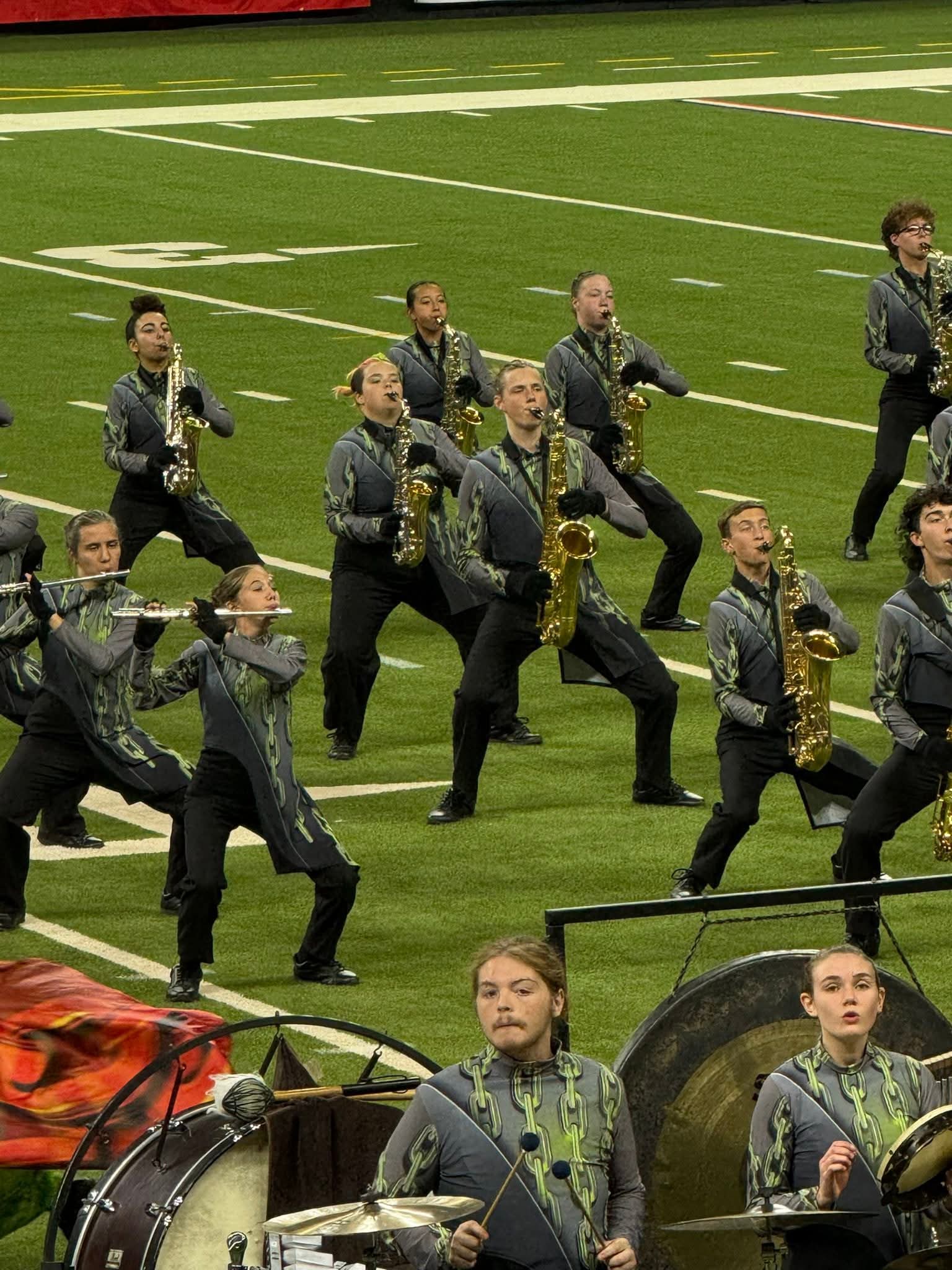
The depths of my clients’ despair, and the height of my children’s joy, all in one day: it’s a lot. Both are real, very real. They are the very essence of life.

One day like this is intense, and usually one has a few days to reflect and process afterwards. But there is no time, because there is another day too close behind it.

So how do I handle life when there’s too much of it? How do I keep from going numb?

The reason this post has been many weeks in the making, and has been such a hard post to write, , is because I do not have an answer. I tell myself things, and hope they are right.
“Be present,” I remind myself, and give the best of myself in the moment. “Soak up the moment,” I tell myself: whether that is enjoying whatever is happening with the kids, or weighing the strengths and weaknesses of an approach I’m considering in a case, or remembering clients’ confidences to me.

In any given hour, or on any given day, there is much that needs to be processed. I find myself unable to focus on what is in front of me because my mind is still sifting through all the events and emotions in the immediate past. Maybe what I need, then, is more time to intentionally reflect. As if time is an abundant commodity! What I need is to give myself the time and space to process all those events and emotions so that I can clear my mind and focus on what is in front of me.

What that reflection time looks like is different for everyone, but for me, it is a few things: writing, like now. And also being outdoors and allowing my mind to wander and do what it needs to (in other words, not listening to podcasts that often just give me more information and emotions to process). Is my introversion showing? I suppose so. It would probably also help to have conversations with some of the people closest to me.

And maybe all that–more reflection time, more being present in the moment–is right. But what I am more certain of is that this phase of life is one that I will look back on as consequential. What happens to our country and what others in and out of my circles choose is largely out of my control, but how I respond to it is not. I don’t know what place I will be looking back from, and I know I won’t have handled everything exactly as I ought to have, but I want to be able to say that I did the best I could, and that I grew during this time. Grew spiritually, emotionally, professionally. That is the best I can expect of this phase, and it is worth working towards.
The World Is Still a Big Place

The World Is Still a Big Place

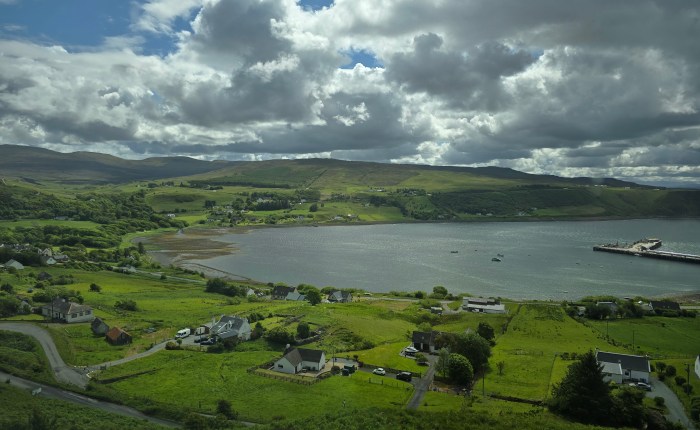
A few days ago, my husband and I were on the flight home from a long-awaited 20th anniversary trip. This post isn’t about all the things we did—fun as that would be to tell.

It’s about some of what I observed, and some of the conversations I had with taxi cab drivers and fellow bus passengers. It was, above all, a reminder to me that the world is still a big place, and there is still so many different perspectives.

I think many travelers—my husband and I, in any case—often wonder, when traveling, what the lives of the people who live in that place are like. We see what they see, and eat—mostly—what they eat. But day to day, what do their lives look like? What do they do after work? Are groceries expensive for them? What do they talk about with their friends? (This is the anthropology major in me, I know.)

But the other question I ask—and perhaps not as many travelers wonder this—is what my life would look like if I lived there. Would I still love the things I love as a visitor? Or would the things I love be outweighed by other practicalities: the cost of living, for example, or the length of my commute and the amount of free time I’d have. And, importantly, would the things I love about my “real” life be able to transfer to this other life?

It’s a form of escapism, I know, imagining life in a new place. But you may understand why. Our life at home has been so overshadowed by uncertainty and dismay since January 20. The new regime has affected very directly the lives of many we know, and it’s affected my work directly. So this trip, in addition to being a celebration, was so needed just to step away and, well, be. To see new things, to start conversations with strangers, and to spend some days away from our routines.

And it was a good reminder that for much of the world, especially outside our country, life carries on. The people we met still carry on doing the things they’ve always done, and finding joy where they can: whether that’s in telling funny stories, or enjoying a good meal with new friends, or appreciating a beautiful garden or landscape.

Because we live in the United States, and America’s actions ripple widely, the topic of politics did come up a time or two as well. In particular, two conversations, one about politics and one not, demonstrated to me the contrast between the country our administration wants us to be and the country that we actually are.

The first conversation was about colleges. Our driver was under the impression that everyone in the United States went to university after high school, and that public universities were automatically accessible to everyone. The private schools he’d heard of—Ivy leagues, mostly—he thought were accessible to anyone who could pay, and were specialized in something: law, engineering, etc. I tried to explain to him in my rusty French that, no, in fact, even the private universities tried to attract the most academically strong class they could, and they often enrolled students who were not at all rich but who showed a lot of potential and so attended on scholarships, etc.

As I was speaking, I realized a couple concepts were basic assumptions we make as Americans that may not exist elsewhere in the world. The first is the idea of merit. Students who show a lot of potential should not be limited in their opportunities by what they or their families can afford. They earn the right to reach for their potential.

The second is that that potential is limitless. American universities are arguably among the best in the world because they attract the brightest minds to work on the world’s most pressing problems, and the solutions those minds have come up with are, truly, incredible.

The second conversation was about politics. Someone asked me what I saw for the future of America, and my answer was that I truly didn’t know. The leaders of the country currently are trying to take us back to a time when power and wealth are held in the hands of very few (and those few happen to be white and male—I’ll say no more than that now). What is happening is obviously more complicated than that, but since I had to boil down my point to its essentials (time and language did restrain, after all), that would be it.

The two stand in stark contrast. On one hand, America has stood for a belief that people should strive to reach their potential (however great or small that may be) unhindered by the color of their skin or the chromosomes in their DNA. On the other hand, America has since the Great Depression fought against, and now is fighting for, the idea that in fact it is a small number of people who should hold the majority of the wealth and power, and decide the direction of the country.

It remains to be seen which vision of America will be adopted by the most Americans in the coming few years, but in the meantime, the world continues to spin, and those outside our country continue to watch us, but only to the extent that it affects them (think tariffs, as an easy example). Otherwise, they carry on with their lives.

One of the folklore tales we heard on the trip was of an elf who offered a solution to people’s problems, but the solution was often worse than the problem. It was a reminder to me that stories repeat over time; putting our faith in a promise maker (or snake-oil salesman—take your pick) often results in grief.

That perspective—that ability to remember always that we always have control over how we react to our circumstances, and that people have (mostly? often?) survived through oppressive regimes, as well as thrived through prosperous ones—may be the best souvenir I will have taken from this trip.