"Universally" Speaking
What do you think when you think of Australia? I’m going to guess that your answers might include:
Kangaroos
Koalas
Sydney Opera House
The Outback
The Man from Snowy River (for the movie buffs)
Waltzing Matilda (for folk music buffs–and n.b., it’s not what you think it’s about)
Waltzing Matilda (for folk music buffs–and n.b., it’s not what you think it’s about)
Laid back Aussies with cool accents
World class swimmers
“No worries!”
“No worries!”
None of these are wrong.
That list is, in fact, what I would have come up with four weeks ago. These things are but a small sampling of what make this country unique and wondrous, but they are not what living here is about. Since being here, in this characteristic, small-ish Australian city, I’m accepting what the first few novelty-filled weeks allowed me to forget temporarily. There are some things about human living that are seemingly universal. Mornings are spent bustling to get everyone dressed, fed, and off to school/work on time. People dash in and out of the grocery store between work and whatever their evening plans are. Young people fret about job prospects and dating prospects. Parents contemplate whether they have the desire–or the energy–to have one more child. They chide themselves for having scolded their kids so loudly that their neighbors might have heard (and judged them). Tired adults, young and old, look forward to sitting down in front of the telly in the evenings. People worry about their retirement accounts and tax rates. Radio talk shows debate how to solve the trending social problem.
More likely, many of these things are “universal” to middle class life in Western cultures–and the privileges that come with it. Just as I’m aware of those privileges, I’m aware that norms about how to raise children, how much free time you are supposed to have and how you’re supposed to spend it, how closely time is followed, etc. would look very different were we in a different country. This both comforts and unsettles me.
We are not in a different country though. Neither are we in the States, and many practices, while they might look similar on the surface to what’s in the States, often have very different underlying values, the subtleties which I am sure will be fodder for future entries. The beauty of this experience is that we have the opportunity to experience day to day living here, but with cultural norms and objects that are new to us.
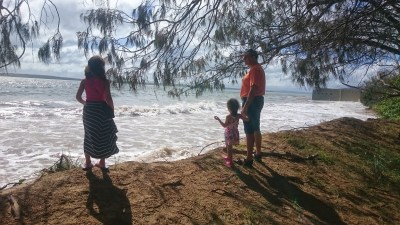
Last week, we were told to stock our kitchens and check our torches (that’s “flashlights” for you American readers) in case the approaching cyclone, Cyclone Marcia, downed the power and flooded the roads leading here. (Snow storms would have been more familiar.) Unlike other cities north of us, we never did lose power or access to food, but we did lose the beach to the high waters!

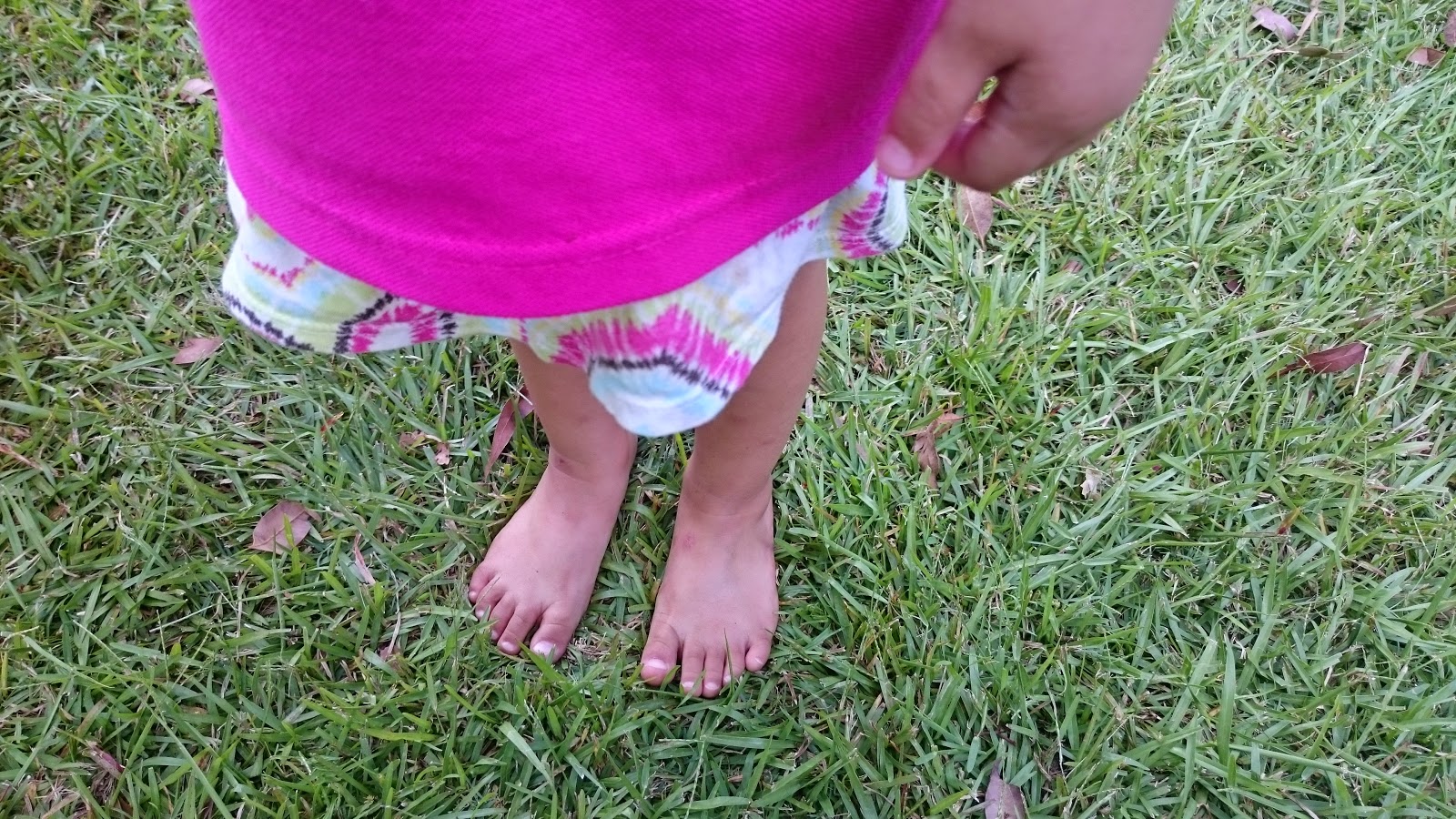
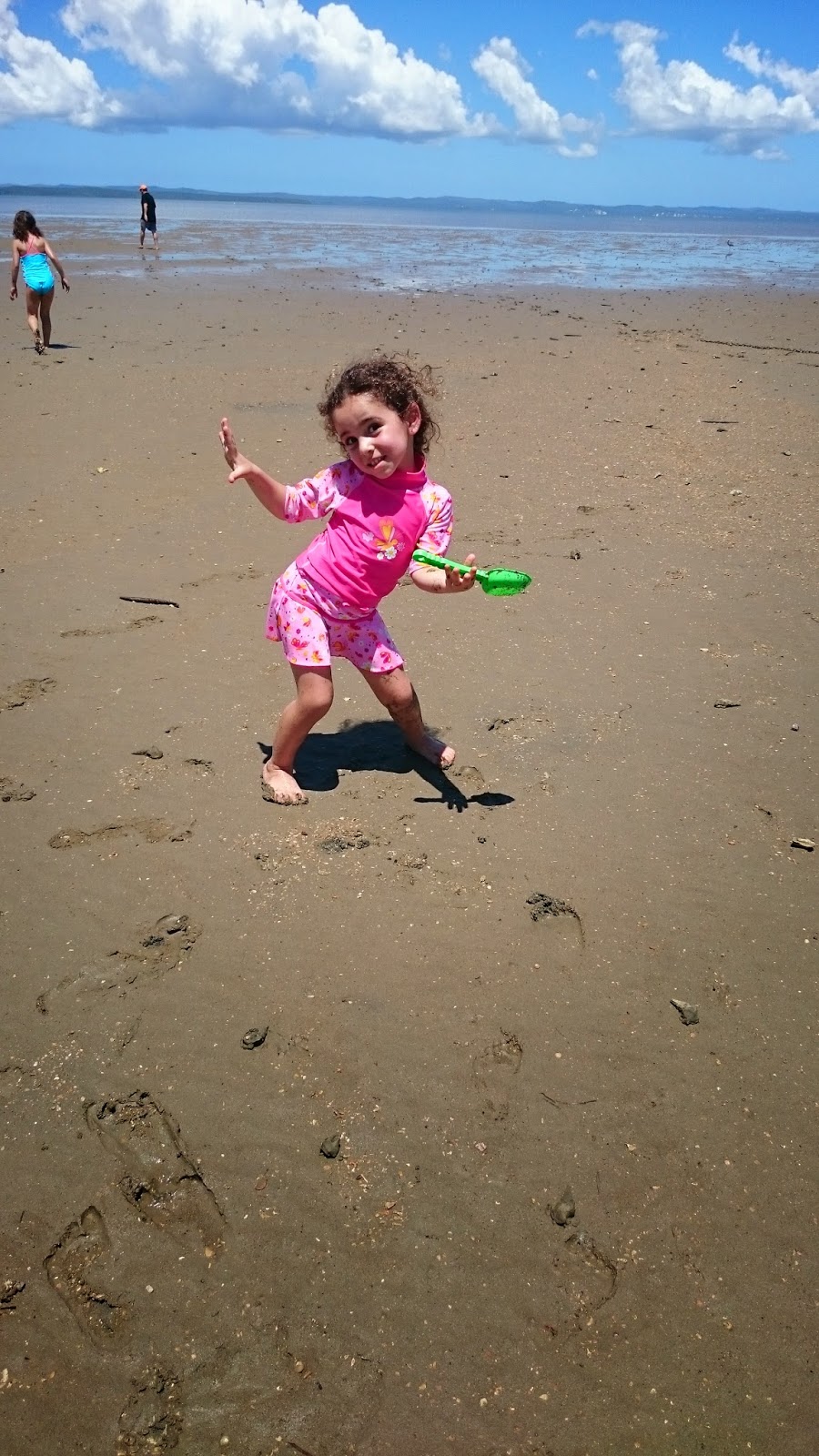
The coming months will include, I hope, visits to see the Outback, and the real Snowy Mountains. And the Sydney Opera House. But for the moment, I am content to observe what’s immediately around me, sing, “Waltzing Matilda” on the way to school with the kids, and to take pleasure in the little things that make life here quite different from life in the States. Like the fact that our three year old has, at school, adopted the very Aussie habit of running around barefoot.
And yes, in case you were wondering, our kitchen is regularly stocked with vegemite. And better yet, crumpets and ginger beer.
What Are We To Make Of It?
So Australia may be far from a lot of you, but in spirit we are not so far away that we can buffer ourselves from the realities of this world. My email and newsfeed have shown in past days, over and over, the orange jumpsuits and faces of the 21 men who were beheaded by terrorists in Libya last week. I could not continue to talk about my own journey without acknowledging those whose earthly journey has just ended–and another one begun.
For those of you who may have missed this, all but one of these men, mostly young men in their 20s and 30s, had crossed the border into Libya from impoverished hometowns in Egypt so that they could work and send money home to their families (the last man, a Ghanaian Christian believed to be Matthew Arayiga, was also in the area for work). They were kidnapped by members of ISIS (aka Daesh) at the end of December and in early January. Reports of those who witnessed the kidnappings say these men were targeted because they were Christians (evidenced by crosses tattood on the inside of their wrists, a common practice among Copts). I can’t bring myself to watch the video, but the accounts I’ve heard of the justifications Daesh announce in it make no sense: it was in retaliation for the killing of Osama Bin Laden (as if these men had anything to do with it), it was because Egypt has been fighting the Daesh and these men were members of the hostile Egyptian church (“the nation of the cross”). What’s clear to me are a few things:
a) they were targeted because they were Christians, and because, with the exception of one, they were Egyptian Christians
b) their deaths, though untimely and brutal, demonstrate a faith that leaves me speechless, and
c) that those deaths are no less heartbreaking, regardless of what they demonstrate.
This story first caught my attention, of course, because I am a Copt. It also caught my attention because my faith in God and in the life, death, and resurrection of Jesus Christ are central to who I am. And it was central to who these men were, too. So central, that by all accounts, their last words as their lives were ending were prayers and pronouncements of that faith. All they would have had to do is renounce the God of Christianity and who they believe Jesus Christ to be, and these extremists would, by the dictates of their own laws, have had to spare these men’s lives.
Imagine for a moment being cut off from everyone and everything that can protect you, knowing that you will undoubtedly die unless you say some words. “They’re just words,” your sense of self-preservation might shout, “say them and take them back later when it’s safe to do so!” How strongly would you have to reject the idea that you could deny your Creator (Matthew 10:33)? What faith would it take to give these men the courage to go through with this? [What] do you believe so deeply that you would die rather than deny it? Could you do have done this? Could I?
Yet this story is also about these men who were human beings with loves and personalities and dreams and families. Because of this horrendous act, mothers and fathers will be grieving, wives will be widowed, brothers and sisters will grow old without their siblings, children will grow up without their fathers, friends without their lives’ companions. These men were in Libya to try to provide for their families, and the guilt and anger their families and friends must feel now–well, I won’t pretend to understand. My heart breaks and my minds goes numb just thinking about such sorrow.
It is, incidentally, this profound and senseless loss, this brutality, that has prompted such universal discussion about human rights. It’s too obvious to state that innocent people, civilians who have kept to their own matters, should not be killed by others trying to make a statement (political, religious, or otherwise). But we do not yet live in an ideal world, where we all live full and fulfilled lives.
We Christians talk a lot as about treating this life as only the beginning of a life of the spirit with God, after this earthly life is over. (The saying that we’re spiritual beings having a physical experience has always rung true for me.) We all know our days on this earth are numbered. Many of us forget that, attaching too much importance to careers, or health, or countless other attractions that this life can hold. These men, I’m sure, did not want to die with so much and so many to live for, but like so many Copts before them, they died knowing that this was not the end, and with this, I will try to be at peace.
___________________________
Some of the sources I’ve relied on:
Article in the New York Times
Statement by Bishop Angelous
Of course, an online search will yield dozens more viewpoints.
No Immunity from the Quotidienne
If it is a virtual escape to the sunny tropics you have come for, read no further. A bubbly entry about mangoes and birds this is not.
Although we have seen rainbows on at least two occasions.
But enough of that.
We finished our second week and began our third still quite occupied with the tasks of settling in. I suspect moving is a headache no matter where you do it, but it’s been a while since we’ve done it. Our state of limbo has even extended to the kitchen. Here, though, I will brag that even with a spice rack consisting only of salt, pepper, cumin, and rosemary, hubs and I–ok, mostly hubs–have still been able to whip up some pretty good-looking meals.
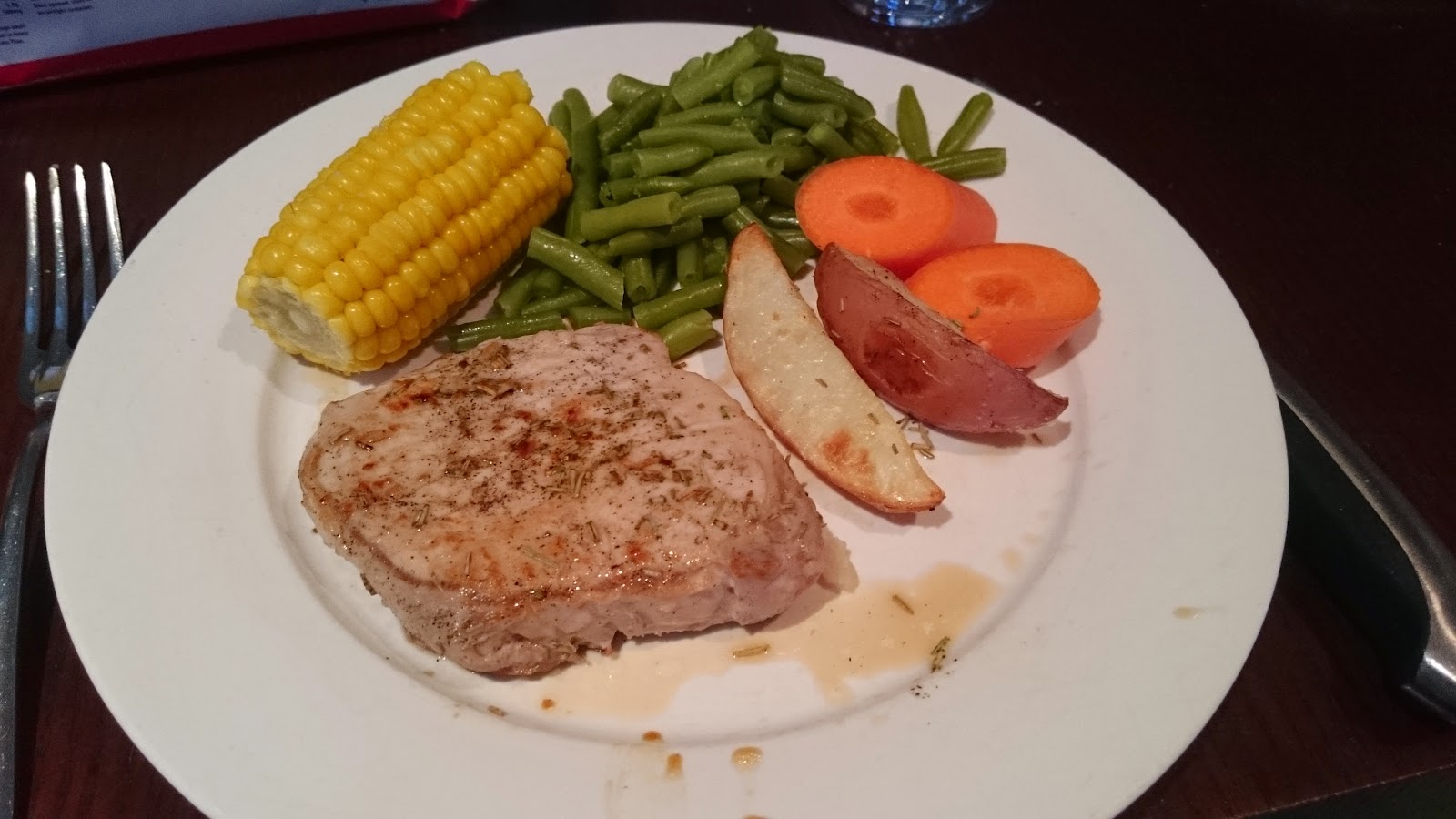
Still, you know those weeks when it’s only Tuesday night and you are sure that Sunday was ages ago? It was one of those weeks. A lot happened: our application for a place to live was approved (yey!). I spent no less than five hours, most of it waiting, trying to set up phone/internet service for said place. Efficiency is under-rated in these parts, a fact that became painfully clear as I tried to occupy a three-year old at the same time. We began to look for a car, a process which included getting our Queensland drivers licenses.
 |
| A picture of some Australian bills, because I think they’re just so cool. How often do you see bills with windows in them? And it was a good way to spend the time while the license was being processed. |
Despite all the mundaneness and headaches, there were a couple moments of transcendence. We attended church for the first time this weekend, and although there were probably no more than 7 or 8 families at this tiny outpost of a Coptic church, the visiting priest observed that 5 continents were represented. There were the Australians, of course, a German-Copt who’d moved to Australia several years ago, a member’s mother visiting from Egypt, an Orthodox Filipina, and us American Copts. If there’s one thing that makes my little heart happy, it’s multi-national gatherings.
Then, just last night, my husband called me outside to look at the night sky. Even with a little light pollution, it was absolutely stunning. Clusters of stars, some faint and blurred together, provided the backdrop for others, bright and innumerable. He pointed out Orion, and we might have seen the southern cross that appears on the Australian flag (we’ll need to employ the use of Google Sky to confirm this).
I am appreciating this new adventure, which is not to say that I don’t deeply appreciate the virtues of home and belonging. But it’s dawning on me that the line between the two is not as thick as I would have imagined. One evening, while I was burning dinner and the 3-year-old was screaming about some injustice I had apparently inflicted on her, it hit home that, yes, some aspects of our lives would remain exactly the same. Our children will unconsciously absorb much of their surroundings, true, but they will also be kids: kids who will test the boundaries their parents set for them, who need their parents’ patience, and who will look to us to help interpret the world around them and what they are to do in it. They will admire the new animals and plants in this new place . . .

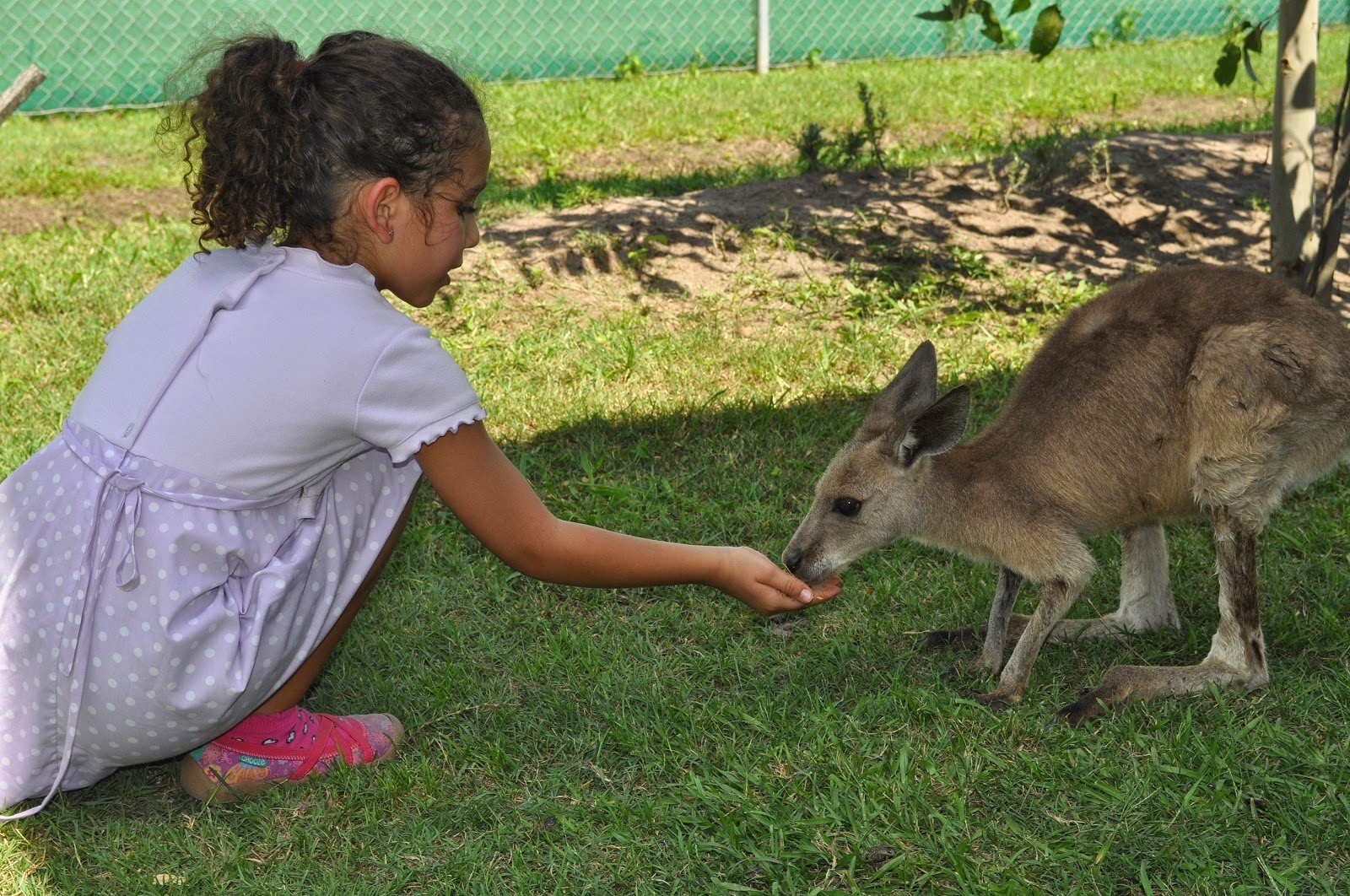
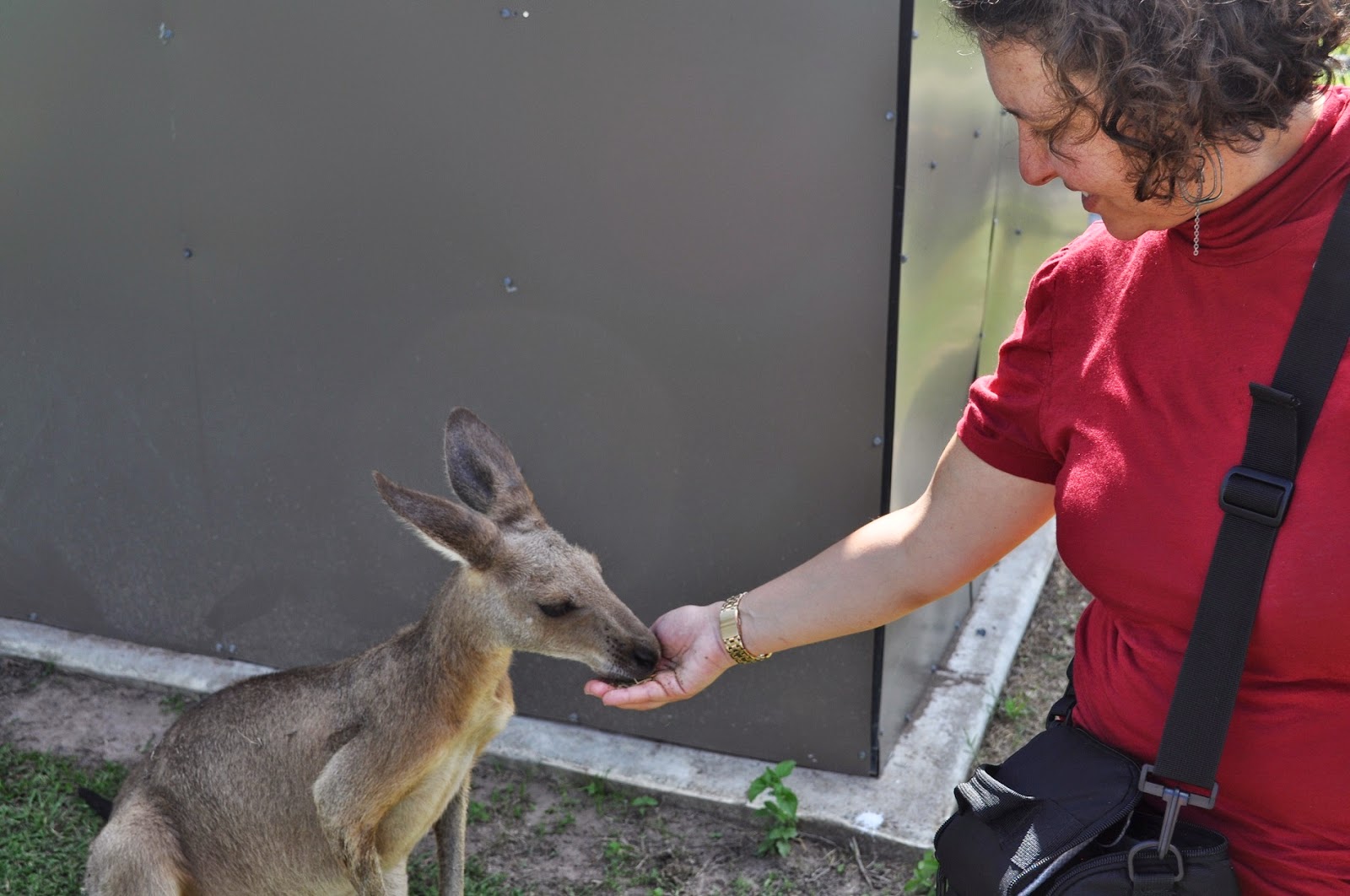

. . . but they will not spend the energy that I am spending to try to analyse things like cultural norms. For the kids, this chapter will not be about experiencing a different culture. It will just be what it is. And perhaps, if only for now, that is what I too should let these early days be: the wonder and the mundane mixed in together, toddler tantrums and all.
Not Vacation, Not Ordinary Life Quite Yet
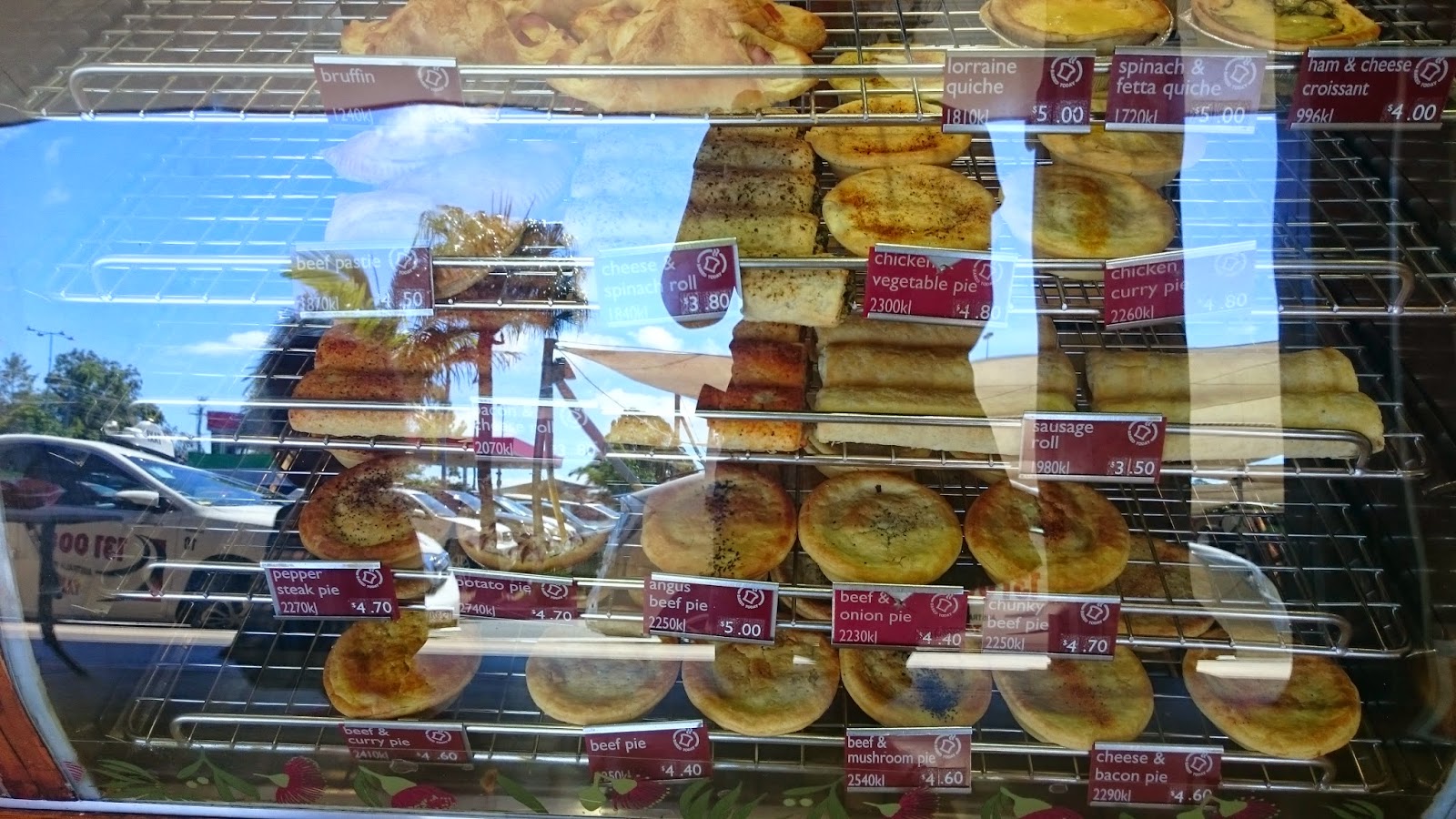
Thing I love about Australia: morning tea.
Thing I should avoid if I want to continue to enjoy the savory pies at morning tea: a scale.
Thing I’d forgotten about moving internationally: you spend the first weeks carrying around every document you own proving your identity and trustworthiness. The number of times we’ve been asked for these documents is unreal.
Creatures we are learning to live with: the little lizards that visit our window screens nightly.
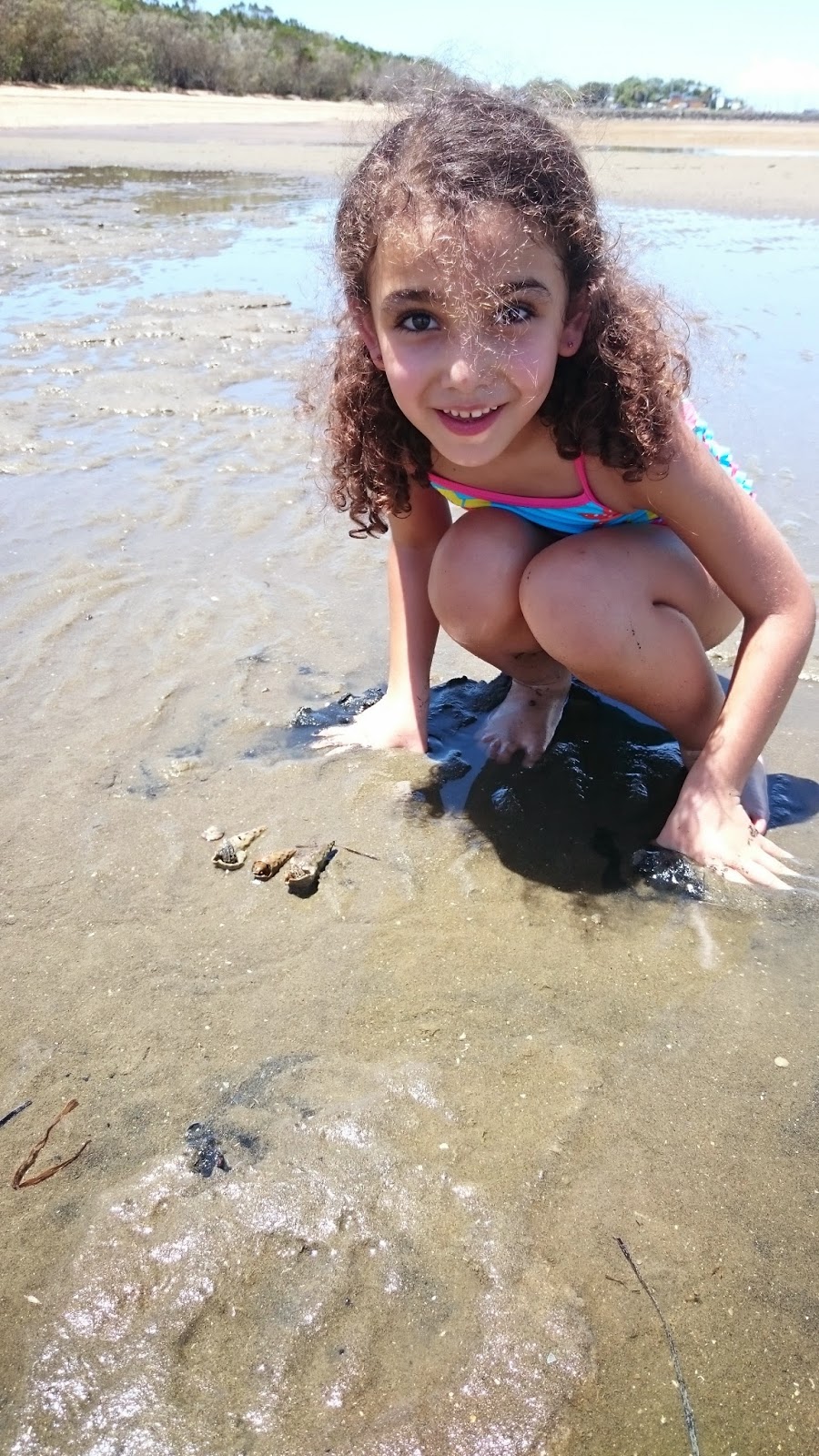
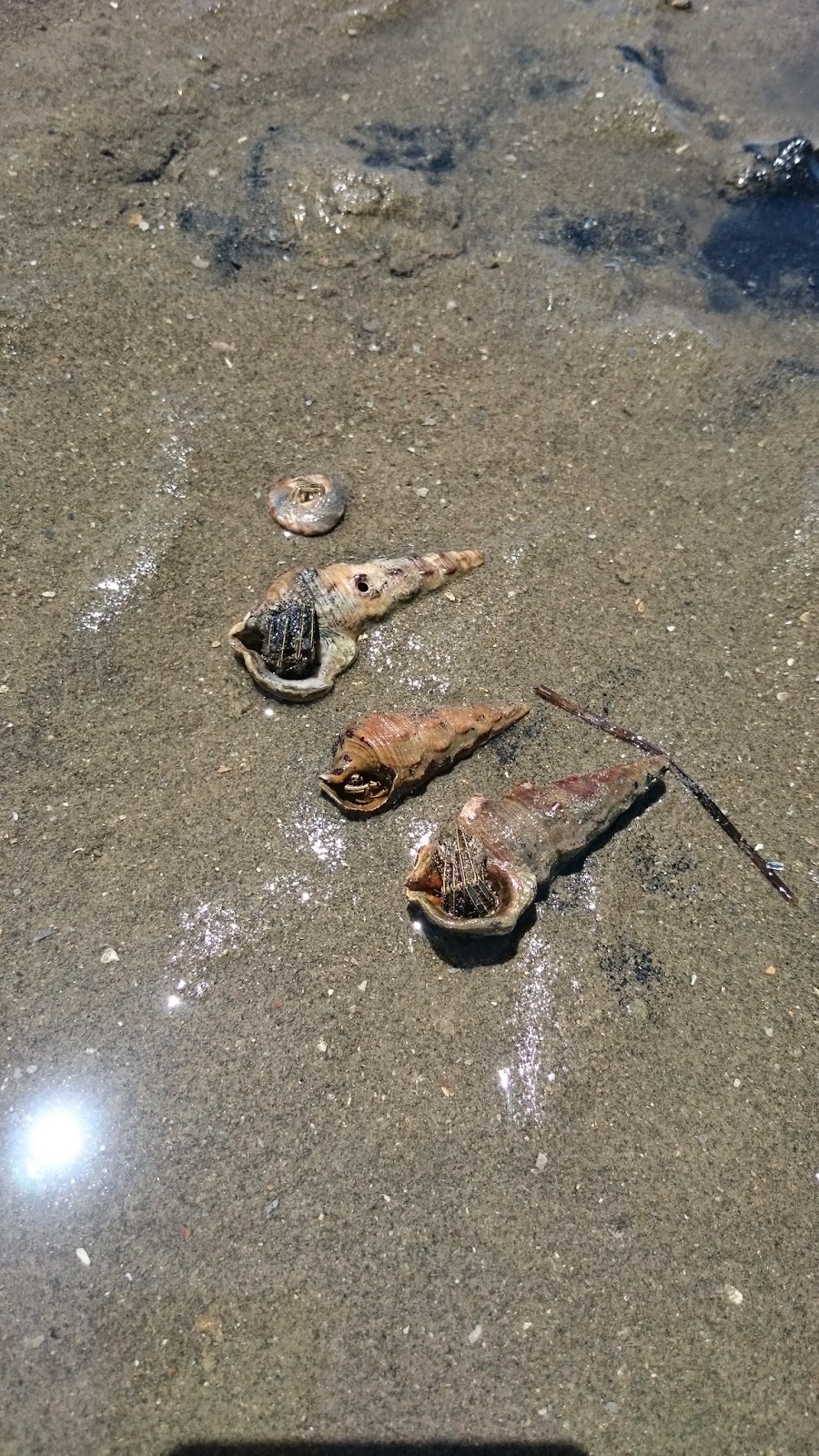
Creatures we are happy to meet: the hermit crabs that we saw literally by the dozens at low tide the other day. (The water recedes, by the way, no less than 75 yards at low tide. It seems endless. The close-up picture is the “family” of crabs Samantha lined up together so they wouldn’t lose each other.)

Thing that reminds me just how close we are to the Tropic of Capricorn: mangoes.
Driving down the street, we have seen so many mango trees with mangoes fallen and split open. Mangoes are so common here that one grocery store even had a box of them offering customers to take one–for free!
I’d consider stopping to pick up mangoes by the road, but that presents too much of a driving challenge: which side can I safely stop on, again? I no longer have to focus quite so much on staying on the left, and I don’t panic when I see a car approaching from the right near side and turning to my right. I turn on the windshield wiper instead of the turn signal just once a day now, instead of every time I turn. Still, mango harvesting might have to wait til next month.
Every morning since we arrived, we have woken up to the sound of some unique birds. I would blame our early mornings on their calls (one warbles like an aspiring soprano, one outright screams), but between the jet lag and the early light, I can’t. The sun rises early: by 5:30am, it’s quite bright outside. Try convincing a three year old that just because the sun is up doesn’t mean that she has to be. I’m a morning person, though, so I don’t mind. Much.
In short, one week in, we are alternately comfortable in, frustrated by, and charmed by our new surroundings. The cross cultural trainer in me fully recognizes that we are still very much in the honeymoon phase…but the experience is very different when you are with kids/family. That will be the substance of future postings, I’m sure. But for now, bed. The morning birds won’t wait.
Protected: FIRST DAY IN HERVEY BAY
REMINDER #53735 THAT LIFE HAPPENS HOW IT HAPPENS
We had planned the logistics of this trip down to every detail, or so I’d thought. The kids had what they needed to be comfortable and entertained for the 30 hour journey. We had favorite snacks and books and tablets. Everything was going surprisingly well those first 26 hours. I even remember thinking, as our trans-Pacific flight was down to the last few hours, how this particular leg of the trip, that I’d so dreaded, had actually gone much better than I’d dared hope. Once off the plane, the kids acted up while we stood in the–very long!–customs line, then the very long bag drop line, but if that was the worst of it, we were ok.
Then we get to the transfer desk in Sydney, and it all falls apart. How could this happen? We had just one short flight to go! We were a couple hours from arriving, unpacking, showering, and celebrating a trans-global journey with young kids completed. We had school interviews to complete and school supplies to buy for the kids the very next day. We were not supposed to get stuck in Sydney!
And then I heard that last line again. First world problems much? Had we not just safely traveled over 9000 miles, mostly over ocean? Was I actually complaining? About unexpectedly finding ourselves in one of the world’s most beautiful cities for a day? Was I really going to spend it fuming about airlines’ complete sadism (although Virgin Australia is pretty un-Australian-ly unhelpful)? No, we would move on. If only because those kids of ours had been such troopers this incredibly long journey, and I, as the grown-up, was not going to be the one to pout for the rest of the day that we were jet lagged, still in our travel clothes and carrying our bags. And trying to keep the kids, who were by this point too delirious to do otherwise, from running off. No, we were going to unload at the hotel, explore a little of Sydney, and start that unwinding and celebrating now.
And so we did. We chatted with a taxi driver who had immigrated from China 26 years earlier. We sampled Thai food Aussie-style, and Emile had the best mango and sticky rice dessert he’s ever had. (Actually, it was more like sticky rice with a hint of mango. The mango slices mostly disappeared. Maddie’s juicy little fingers and declaration of, ” I wub mango!” might offer a clue.) We saw a man on stilts wearing a fruit covered skirt and hula hooping. Samantha found him fascinating, being an avid hula hooper herself, then upon closer inspection, “creepy” (she didn’t like that his face was painted). I had coconut water out of a coconut. And, of course, we let the kids let loose in the hotel room to enjoy those carefully chosen toys and watch their first Australian kids’ programming while we allowed ourselves to relax.
We started to absorb the vibe of this nation where we’ll be spending the next 12 months of our lives. I think we’re going to love it.
Protected: Temporary Haiatus
Civility is Such a Quaint Concept
I was having a conversation with a colleague recently about the decreasing ability people apparently have to carry on civil conversation when they disagree. Do we know how to have difficult conversations? As a society, do we have a lot of opportunities to practice having these conversations?
The cynical side of me says no: just look at all the talking heads and political pundits talking over each other and cutting down each others’ points. It is good entertainment: having made more jabs than the other person, one pundit can come out the clear winner. We like clear winners in a world that is otherwise gray. More personally, look at how we tend to drift towards people who think like us, and scoff, roll our eyes, or shut down when we encounter opinions we don’t agree with. (I’m generalizing of course: not everyone is this uncomfortable with difference.)
But that’s my second point. My first point is that, when I was having this conversation with my colleague, he said something that started me thinking. He said (and I’m paraphrasing) there is nothing wrong with having these disagreements, because there is not always an answer that is acceptable to everyone. Sometimes we value compromise and everyone getting along so much that we don’t allow for the fact that people are fundamentally different, and that we should not try to conform everyone to fit one way of thinking. Of course I agree with that, but my question is this: is there any benefit to even having dialogues about these differences? Not for the purpose of changing one side’s mind, but for the purpose of really understanding how each side reached the conclusions that it has reached? And if so, how do we do it in a way that is constructive, not destructive?
Or maybe he meant that sometimes one side’s position turns out to be just wrong. In which case, let the facts speak for themselves; no reason to get upset or self-righteous over it. The problem, of course, lies in how the facts speak. The adjectives that are chosen and which statistics are provided can lead to two completely different statements of the “facts.” How any of us understand a situation is colored by what we knew about that subject already, what we want to believe about it, and how it is presented to us. It is the rare and rigorous mind that is able to distinguish the facts from the personal beliefs associated with those facts.
So given that, I think it is all the more important that we as a society learn to have dialogues expressing why our opinions are what they are in a setting where others will disagree. This is hard, I realize. It’s much easier and more comfortable to stay where we know we will hear our opinions reaffirmed. But the older we get, the more, I hope, we realize that while there are some really wacky ideas out there, most opinions with which we disagree are not complete nonsense, but rather that their holders have looked at the same set of facts through a very different, and often not entirely absurd, lens. When we start to have conversations that don’t reaffirm our beliefs, but rather challenge them, that is when we really begin to think. Many possibilities emerge, including that our mind is not changed, but we now better understand and can articulate why we believe what we believe, or that we realize we have been looking at the facts with a very tinted lens, or that we believe the same thing as the other person but express it differently.
So back to my second point. How do we actually have these difficult conversations? Even if we can be calm and speak respectfully, how do we respond when someone else is simply throwing out insults? I think there are a few key principles to follow:
1) Focus on the ideas and arguments being presented, and avoid insults which serve no purpose but to alienate or rile up the other side. I know a person whose m.o. in most debates is to push buttons by insulting and accusing. It’s entirely annoying and completely unproductive.
2) No ad hominem attacks. Insist that others avoid the same. Listen to the words, not the speaker. Just because you don’t like someone, it doesn’t mean that what they have to say is worthless.
3) Seek to understand. Check your assumptions about what a person means, and ask clarifying questions with a mind to truly understanding the source of their belief/anger/frustration.
4) Listen. If you are moderating a discussion, make sure to create space for quieter voices to speak. If there is no moderator, be deliberate about not dominating the conversation with restatements of your position, but rather encouraging other(s) to explain theirs.
5) Know thyself. If you are speaking with someone who you cannot tolerate, or if you find yourself defending a position you are not sure you want to defend, walk away. Unless you are at a point where you really can (or at least want to) achieve understanding (see #3), you are more likely to do more damage than good.
What other principles are important? I’d love to hear your thoughts…
Five Things No One Tells You About Being a Parent
1. Parenting is Acting. Perhaps this component of parenting will change as the kids get older, but in these early years, I find myself donning a much more enthusiastic version of myself than is natural for me.
“Christmas lights, Mama!”
“Yes, there are the green lights, Maddie.”
“CHRISTMAS LIGHTS, MAMA! GREEN!” Apparently, my initial response was not adequately animated, never mind that this news has been delivered every day since those lights went up.
“Yes! I see the green Christmas lights! Wow! Very pretty!”
Satisfied now, she concludes: “Green. Wow.”
Then there are the days that I wish I could act more convincingly. Those days that I am tired, frustrated, grumpy from having to listen to whining and squabbling all day, only to then have them snap into the best mood ever and wonder why I’m not doing the same.
Maybe in later years, the acting will be more like controlling my irritation at a teen’s insolence, or controlling an overreaction to something. Either way, I think those skills I learned in that fun little acting class in college will have to be revived.
2. Parenting is Heart-breaking. I often look at my children, so innocent and loving and so able to live in the moment (they know no other way), and wish I could protect the happiness and simplicity of their lives. Instead, I know that my heart will break a hundred times as I watch them grow, because I won’t be able to protect them from everything. (Unless we move to a remote corner of Montana, cut off access to TV, internet, and other people. Maybe I need to give this option more thought…) They will lose that innocence. They will be hurt by others. They will encounter hard situations. They will be challenged and doubt their abilities. It’s only as a parent that I’ve learned how hard it is to watch someone you love so fiercely experience hurt or disappointment.
Still, I will be able to protect them from many things. And I think E’s and my role as parents is to steer them away from wrong, and, as they get older, teach them how to endure life, and do so with grace. More accurately, it is our role as parents to teach them reliance on God, and to model it. But that is a post for another day.
3. Parenting delivers a brutally honest look at yourself. No other job, degree, or endeavor has pushed my limits so far and so constantly. And in so doing, parenting has made me see, with brutal clarity, my own shortcomings, tendencies (good and bad), and how they affect my choices and reactions. It is a humbling lesson. The other thing I would say to parents is: watch yourself. I’ve often been surprised by some facial expression that my 5 year old will make, or something she will say, only to realize that she is mimicking…me. Talk about a wake-up call!
4. Parenting Changes Everything.
Where you used to drive by a playground with barely any recognition that it was there, now you make a note to add it to the list of possible kid activities within walking distance. And if the kids are in the car, you try to draw there attention away from it. No time to stop now.
Where you used to see a room’s decor, you now survey what is breakable, what objects are within reach, whether a surface is stain proof or not.
Where you used to plan the weekend around what you wanted and needed to do, now you plan it around what will keep the kids occupied and happy, and, therefore, you sane. Errands and cleaning will have to be squeezed in some other time and way.
5. Parenting is the Biggest Adventure you can embark on. Nothing else seeps into every corner and moment of your heart and time the way being a parent does. It demands the best of you, brings you to your knees, fills you with joy and pride, fury and shame, worry and love. I’m still early in my journey, but I anticipate the coming years knowing that I would have my life no other way.
 orangeskyandmoon