Kia Ora

Kia Ora


New Zealand, where we’ve just spent a two-week holiday, is also known by its Maori name, Aotearoa, meaning “Land of the Long White Cloud.”
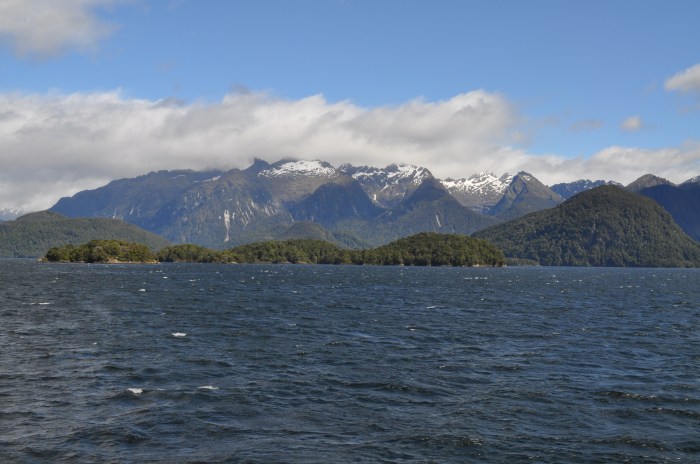
DSC_1194
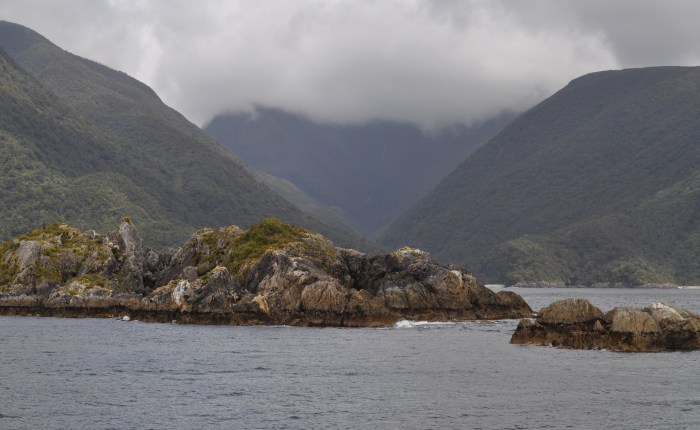
Lake Manapouri, which we crossed to reach the even more stunning Doubtful Sound.

More than one person mentioned this mythical cloud before our visit. I’ll leave it to those of you interested in learning more to look up how the islands got this name. We had clear days and cloudy days, but somehow, even the gray skies looked lovely against the deep green and grey of the mountains in the landscape. I’ve always been an ocean lover—I’d choose the beach over mountains pretty much any day, but my admiration of New Zealand’s beaches will have to wait until our next visit. It was the mountains I fell in love with this time around.


We were also advised, repeatedly, to pack for all weather. Again, I’m glad we listened. We saw temperatures that, even in summer, ranged from 3C (or about 38F) all the way to 25C (about 77F).

We were fortunate to be able to spend a whole two weeks in New Zealand, but it was only two weeks. I won’t pretend to have a deep or thorough understanding of the country or the dynamics of its white New Zealander-Maori relations, but I will say that, on first impression, I’m struck by the degree to which Maori language and culture have been integrated with modern New Zealand. Examples: road and other public signs are bilingual, there are a couple public Maori TV stations, and plenty of merchandise, etc. lists the Maori name along with or instead of the English name.

We spent several nights in the southwestern area of the South Island: the Southern Alps. In addition to the breath-taking beauty of the mountains, the area includes one of about ten dark sky reserves in the world: areas where artificial light sources are so strictly controlled that the stars can still be seen with unreal clarity. Orion, which has become a familiar constellation to us in Australia, was actually a little harder to spot because we could, for the first time, see so many other stars crowded in and around it. It’s rather astonishing that lit nights, which we regard as generally beneficial, actually diminish something so beautiful.

This natural beauty was on the South Island. Before that, though, we began our trip with a few days on the North Island. For all you Lord of the Rings fans out there, you might enjoy these pictures from Hobbiton, where all the [outdoor] scenes of the Shire were filmed.

We would drive a hired car around to the various destinations, as New Zealand is small enough to be quite drive-able (especially compared to Australia or the United States). On the advice of our Kiwi neighbours, we decided to stay in holiday homes, or “bachs,” along the way. This was advice that we heeded and are so happy we did. I mean, what hotel would give you a view like this?
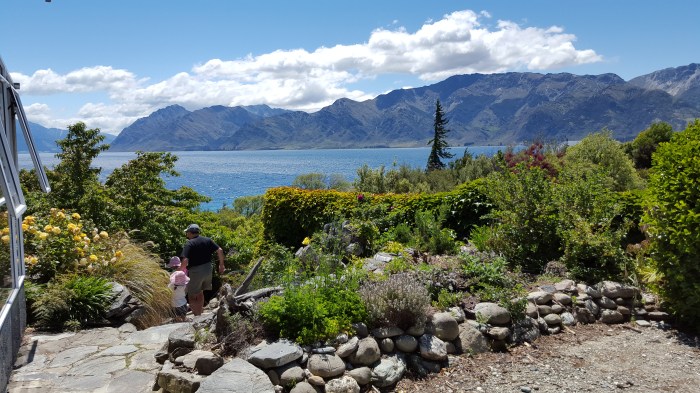
 

20151210_124411

All this beauty came at a price: internet access was very hard to come by. It was a revealing insight for me on a personal level to realize how much I relied on having my friends Google, email, WhatsApp, etc. at the tip of my fingers. I didn’t like how uncomfortable–initially, anyway–their absence made me, and it has given me something to think about.

Deep thoughts aside, here are some more moments from the trip:

Anyway, in the end, it was a special and memorable trip, ending with some quality time in Christchurch with old friends from Columbus.

People have asked and will ask about it. As we have done since photos were invented, I will show pictures, like this,
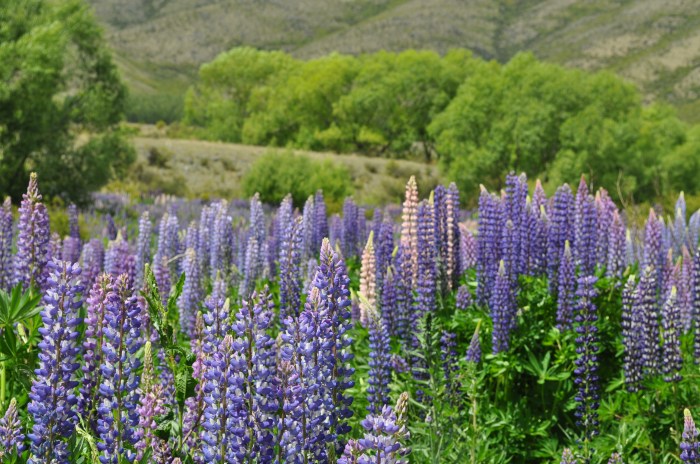
DSC_1258
Lupins along the side of the roads we drove.

and this.

DSC_0023
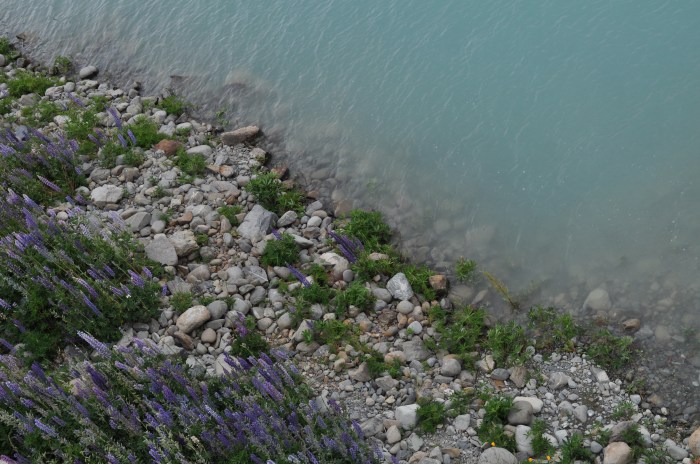
The milky blue colour of this water is the sun’s reflection of the glacial flour that floats near the top of the lake.

But in the end, pictures don’t capture what it’s like to be here. To feel the magnificence of this place, you’ll just have to visit New Zealand yourself.

Kia ora, everyone.

Cold Noses/ Shiny Brows

Cold Noses/ Shiny Brows

Fall in Ohio (or in Michigan, where I lived before) is a time of chilling weather and shortening days. I don’t appreciate these changes, because they herald even colder and darker days in the months ahead.

But fall is also traditionally a season of rituals and captured moments of time passing: attending football games, apple picking,

Apple-picking 2
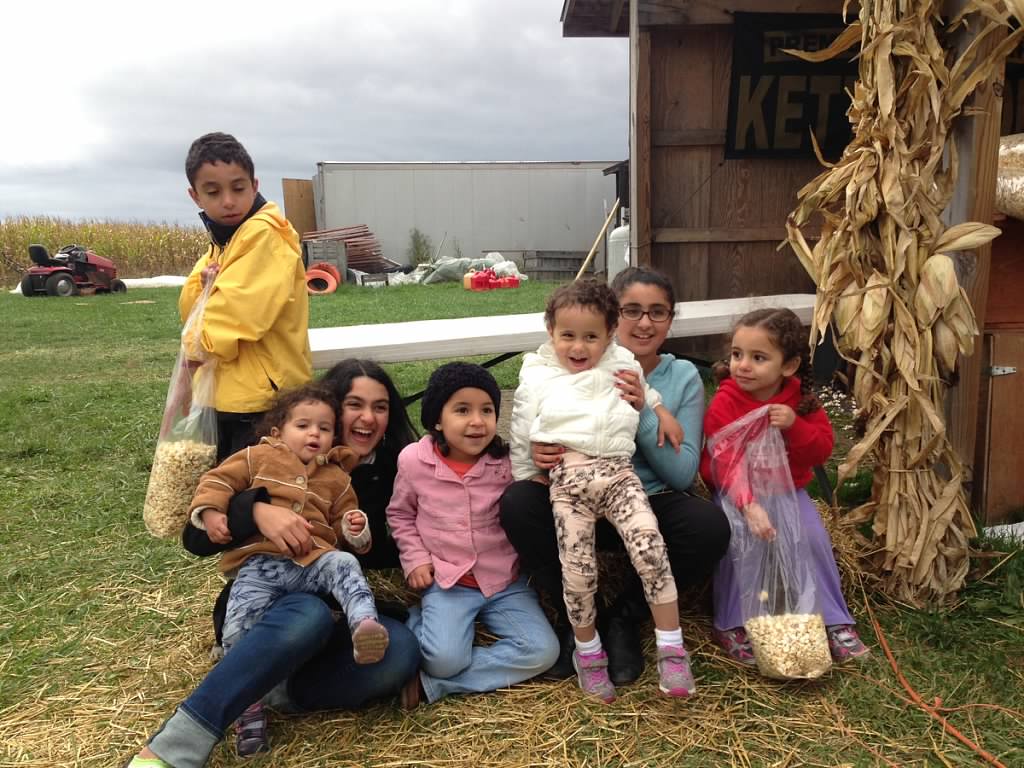
Apple-picking with friends, Fall 2014

Apple-picking 1

Apple-picking 3

Apple-picking 4

and preparing for Thanksgiving.

My sisters and I at the Chicago Turkey Trot (Thanksgiving, 2014)

And these are things I deeply cherish.

But this year, it is neither fall, nor are there the usual rituals. The weather is not getting cooler; it’s getting warmer. The days are not getting shorter; they’re getting longer. Buckeye football is literally a world away (but not totally, thanks to the wonders of modern technology). I had to make a special request to the butcher to order a turkey for Thanksgiving.

It is spring in Queensland, you see, and the months ahead will bring heat and beach time and all things summer (n.b: I love summer).DSC_0192

Oh, and Christmas. Christmas will be in summer, a fact I have a hard time wrapping my snow-conditioned brain around.

Time is passing without the familiar markers. Every time I’m asked, I have to think twice about what month we are in, and where we are. It’s doing strange things to my sense of place.

Time is a strange construct indeed, friends. Never has that been as clear to me as it is right now. So if you see me pulling out the ear muffs and lighting a fire, please, someone, remind me that it’s almost summer in Queensland. And yes, that it’s November too.

Midway Points

In my 10th grade English class, there hung a poster that said you could always go to that still place inside yourself. Something like that, anyway; 10th grade was a very long time ago.

One thing I’ve learned since those days is that sometimes it’s harder to find that still place than it is other times. The days when that stillness radiates out into my actions and words, those days when I am assured of who I am and what I am meant to be doing, those are the best days. (Incidentally, they’re also my best writing days.) But there are the other days, the days when my thoughts are so crowded with plans to be made and inquiries to respond to that I forget that there is even a still space to which I can go. Those are also the days, ironically, that I feel my voice go quietest. No, not my physical voice: it’s the voice I think we all hear–or is it just me?–narrating our inner lives.

In any case, I’ve had a lot of these later types of days lately: the chatter in my head about things to do has concealed the fact that the stillness, the purpose I crave have been absent. This might seem strange, given our current life in sunny Queensland, but the truth that’s been dawning on me the past couple of months is that mindset matters. When I can stay focused on what’s most important in life–how I dislike that cliche–and what I most need to prioritize, viola! I’m at peace, and my days are more fruitful. But, let my mind or my hands get distracted, as they too easily do?  That inner voice goes silent, and at the end of the day, I feel like a hamster that’s spun a wheel all day but not actually gotten anywhere.

And the thing is, it matters less than I would have guessed what the external circumstances are. There are many things that compete for our attention/effort/time as adults living in 2015. We can be anywhere on the spectrum between juggling multiple responsibilities/roles and living with high stress and a high-speed daily pace, to having the good fortune and time to pursue interests that are not, strictly speaking, necessary. In the past year, I’ve been at multiple points along this spectrum. I feel myself pulled in different directions no matter how “stressed” or “busy” I am or am not. The substance of the distractions may be different, but their effect is the same: loss of focus. Now, whether it’s cosmic forces that conspire to crowd our minds, or whether our tendency to even allow these distracters into our minds is a failing of humankind, I’ll let you decide.

We are now just past the midpoint of our soujourn in Australia. The other day, we were driving past a place in town when Emile and I started reminiscing about something that had happened the first time we were there: it had been in perhaps our first month in Hervey Bay. I think about what has changed since then and can only wonder what this second half of our stay will bring. This is a time of being settled, I’m finding. Our community here no longer treat us like the newcomers to be welcomed with an effortful hospitality, but rather as friends. Likewise, we don’t feel the need to crowd every free moment with tourist-like photo opportunities. Just every other moment.

This midpoint, as all the stages thus far have been, is a priceless stage, filled with its own unique gifts and enlightenment. We can look back at what has happened and changed over the past months, but we don’t yet have to make decisions about what is to come after this time is over. So I can only hope that, while we are here and I can put some dedicated effort into such things, practicing increased focus can be one of them. The idealistic 10th grader in me is counting on it.

Notes from an Amateur Anthropologist with the Lens Turned Inward

…Or, Incidental Thoughts in the Mind of a TCK with an Anthropology and Law Oriented Mind Who Became a “Mum” Along the Way 

Being in an unfamiliar setting has a way of filtering apart the parts of you that are truly you from those parts that you’ve been taught to include in your life. Whether we admit it or not, whether we like it or not, our views and attitudes, practices and habits–really all the things that make our life ours–are influenced by our surroundings. Yes, we can consciously resist something in our surroundings that we don’t agree with, but there is plenty that we absorb, mostly unknowingly. For most of us, living our day-to-day lives, this influence is not even detectable.

My everyday life has also gone from harried working professional to “just” a mother (“mum”) and aspiring writer, and my wardrobe has reflected this metamorphosis. My complete abandonment of fashion or make-up (not that I was very big on either before) feels like a return to my essential self. If I’m not smelly or sticky, my hair is tolerably untangled, and I’m wearing clothes that are sufficiently unstained and coordinated to appease my OCD, then everyone shush. Anything more is to impress others, and therefore entirely unnecessary so far as I can tell. Actually, now that I think about it, even some of those basics are more for others than for me (I’m not the one who has to look at my clashing outfit, after all), but a gal’s not entirely immune to social norms.

That said, times when we’ve been in a city like Sydney, surrounded by the fashion-forward crowd, I may or may not have found myself casting longing looks at window displays of scarves or boots, both of which I have an irrational fondness for. In those moments, I choose not to question whether such items are, strictly speaking, really necessary.

In this way, moments in the past few months have brought into sharp focus for me just what about me is more, and less, influenced by my surroundings. The first moment actually came to me when I was driving along, listening to an RN broadcast (that’s Radio National for the uninitiated), and recognized how grounded my mind was listening to the news and debates of the day here, and how happy it made my heart–just as NPR does in the States. Listening to MPs in the Australian Parliament refer repeatedly to the “members opposite” as they passionately discuss a bill is unlike anything I’d hear on NPR, but something about it is very familiar just the same. Yes, “public radio nerd” is a badge I wear proudly.

Something else that I’ve noticed in our months here, and the proximity to wildlife that defines this life, is my changing attitude about this proximity. Little geckos have occasionally come indoors. This might have generated my story-of-the-day in our reptile-free life in Columbus, but here it merits no more than a passing observation. They are fairly harmless–though their insect meals aren’t likely of the same view–and they generally find their way back outside as quickly as they can. Given that they eat mosquitoes, you can even say they’re beneficial to us. Likewise, the flying foxes that we regularly see at dusk near our place won’t hurt us if we don’t bother them. It’s really no big deal. I’m starting to feel the same way about many of the creatures we’ve seen here: birds, spiders, etc. I see no need to extinguish them completely from our surroundings.

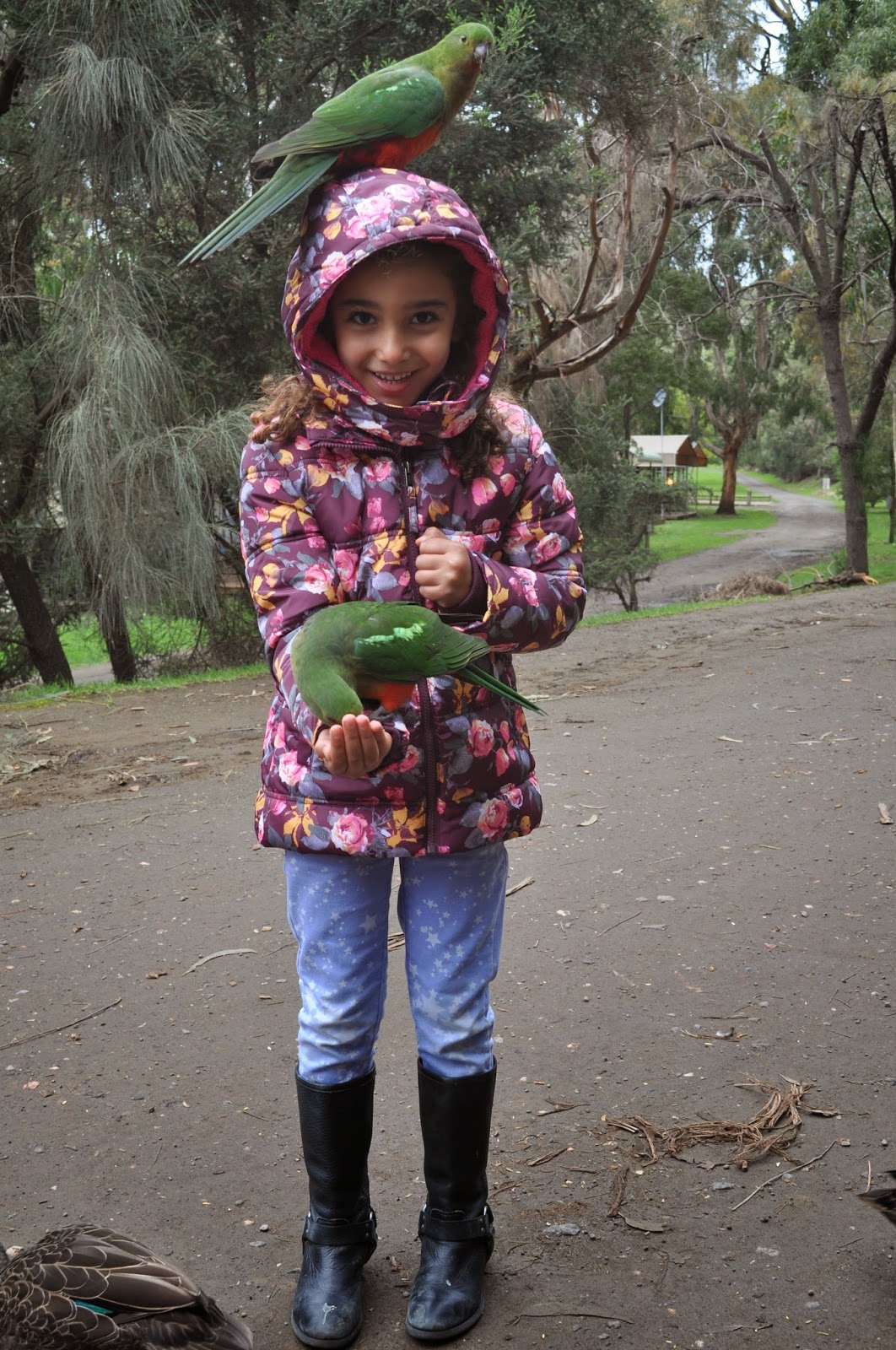
I would not, however, have objected
if these King Parrots had restrained themselves
from entering my immediate surroundings.

That said, once I see a snake–and I’ve been told my chances of leaving without encountering one are slim–I’ll be a lot less laissez-faire about the whole thing.

The girls, on the other hand, were quite happy
to have them invade their personal space.
If, in fact, I ever do see a snake, I’d hope that my love of running, which has also proven itself pretty central to my overall sense of self, will kick in and transport me as far away from it as possible. With that, I think I’ll go find my running shoes and practice my great escape, while, of course, listening to a  public radio podcast or two.

Reflections on Mother’s Day

This past weekend was Mother’s Day weekend in many parts of the world, including Australia and the U.S. But something about this year was different. Whether it was the fact that both kids were old enough to know what the day was about and to express themselves in their own way, or whether it was the fact that I was experiencing it away from the usual social cues and rituals that surround it in the States, it was just…different.

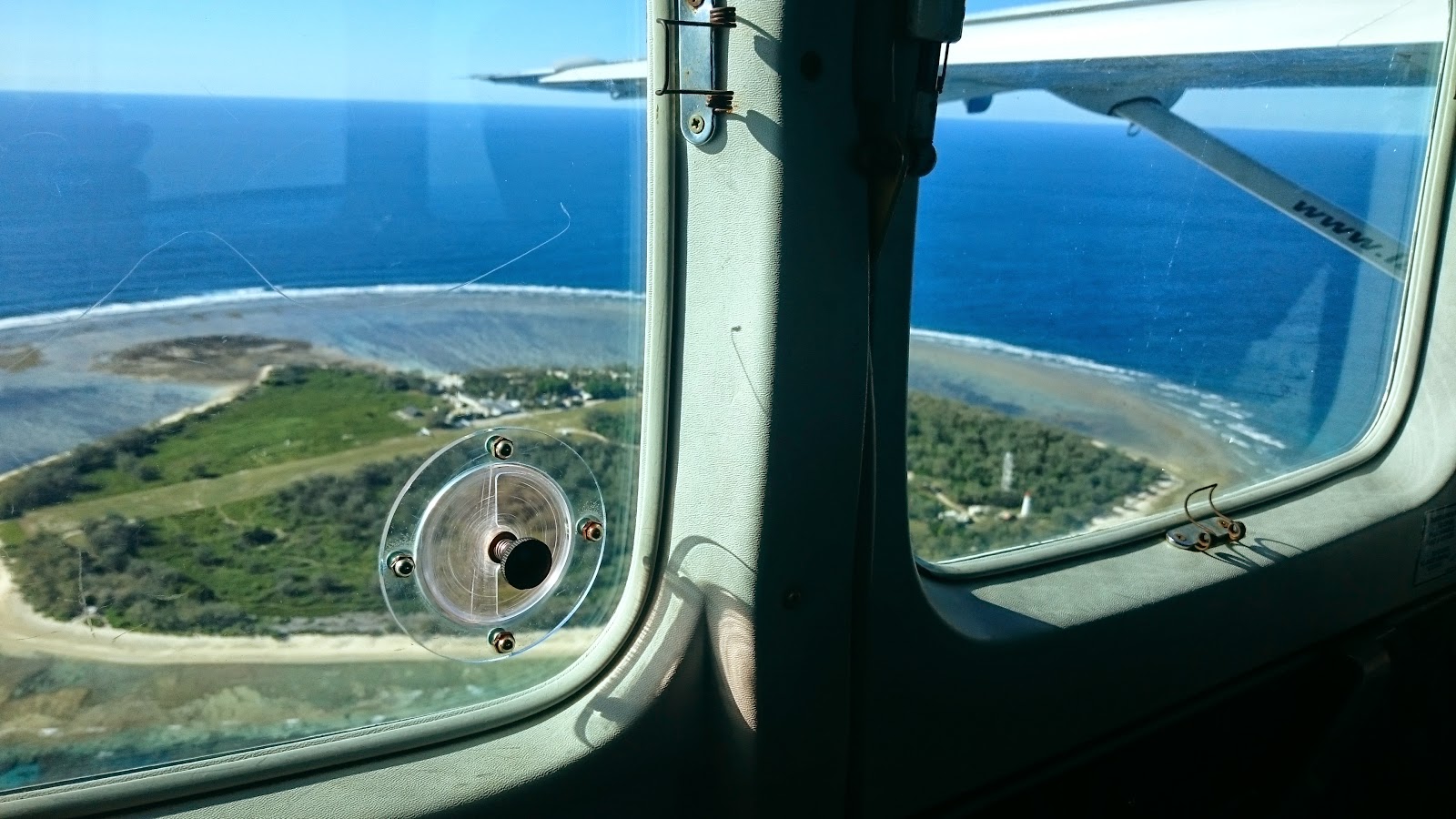
Coral-filled waters off the beaches of Lady Elliot Island

And eye-opening. The day is meant to celebrate the relationship between mothers and their children, with the myriad of forms the connection can take. Over time, the day’s focus has ranged from highlighting the unique relationship every mother has with her child/children, to highlighting ways in which mothers and their efforts have made the world go ’round. (N.b: I am referring here to the many women who have actually  raised, or are raising, their children. I am not addressing those who, for any number of reasons, did not or are not.)

But as I read Facebook posts of “best Mom ever” declarations, and watched advertisements promising products that will make mothers feel as special as they deserve, I kept asking myself: since when is it not enough to celebrate that motherhood is a unique and, dare I say, mysterious bond?  Since when is it not enough, just this one designated day, for a mother to reflect on the fact that she loves her children fiercely and unconditionally, and that, despite her imperfect parenting and the mistakes she (and every mother) has made, she is trying her best? And for her children to acknowledge the same? When my children are old enough to think about these things, that’s what I want. Why all the superlatives? Is there really a prize out there for Best Mother? Doesn’t that depend on who the child is? Surely we all recognize that mothers and children can have personalities that are better or worse matched. Surely we recognize that, if we are lucky enough to have children, or a mother–or both!–that this, in and of itself, is a precious gift, imperfectly shaped, but a gift to be held and cherished nonetheless.

And why the quest to get the perfect gift for Mother’s Day? I say this hesitantly, as I love presents as much as the next person. But really: are flowers, brunch, jewelry, what-have-you, really necessary (as they seem to have become in the States, anyway)? I sometimes wonder if this drive has been prompted by an expressed desire by many women to feel appreciated. If I’m right about this, there may be many reasons for this desire (a rare opportunity in the busiest social circles to focus on relationships, recognition of a mothers’ sacrifices, etc.), but I think I know what one important one is.

You see, there are mothers that I think of as the “accidental” mothers. I’m guessing we all know (or perhaps are) someone like this: the idea of having a family is lovely, and with hope and nostalgia, it’s something these women go about making plans to have. Family movie nights, reading books at bedtime together, hilarious family vacation memories, messy food fights: bring on the swelling music and grainy photos of laughing families.

What accidental mothers are not prepared for is the sheer difficulty and sacrifice of motherhood. Somewhere along the way, for all mothers, it gets incredibly tough. And in that moment, they realize that they have accidentally stumbled into something much bigger than photos and nostalgia. That moment may be as early as pregnancy. It will almost definitely be during the first few sleepless, wail-filled months (or years). It may be when handling three kids under the age of six. It may be when trying to keep the emotions in check while responding to an angst-filled teenager. It may be sitting in a hospital room, looking at the fragile body you gave birth to hooked up to tubes and machines. The examples are endless. My point is this: motherhood is incredibly, and repeatedly, difficult. And it is my firm belief that plenty of women enter motherhood having no clue what they’re signing up for. And so perhaps Mother’s Day has become, for some among them, less about celebrating the bond they have with their child/children, no matter how accidentally it might have come about, and more about celebrating the fact that they are surviving this challenging journey.

And you’ll pardon my saying so, but I think that’s a shame, and a waste. No matter what we mothers thought we were signing up for–no matter how accidentally motherhood may have entered our lives–it can be such an inexpressibly beautiful relationship, and it is a waste if we don’t take the chances we have tending to that bond with our children. Instead, too often we end up wishing away the time, or wishing circumstances were different. And then the years have slipped by and the relationships have solidified into something far less than they could be.

What’s my point? I’ve been the mother who felt under-appreciated and, shortcomings glaring at me, like a poser. And I don’t want to be there again. I don’t want to expect flowers or presents. I want the day to be a chance to reflect on how we are doing rather than a day spent hearing and comparing who is the most this and best that. None of it matters even half as much as what kind of a story we are building within our own family. It’s there that the memories and music live. And I hope that’s a perspective I never lose.

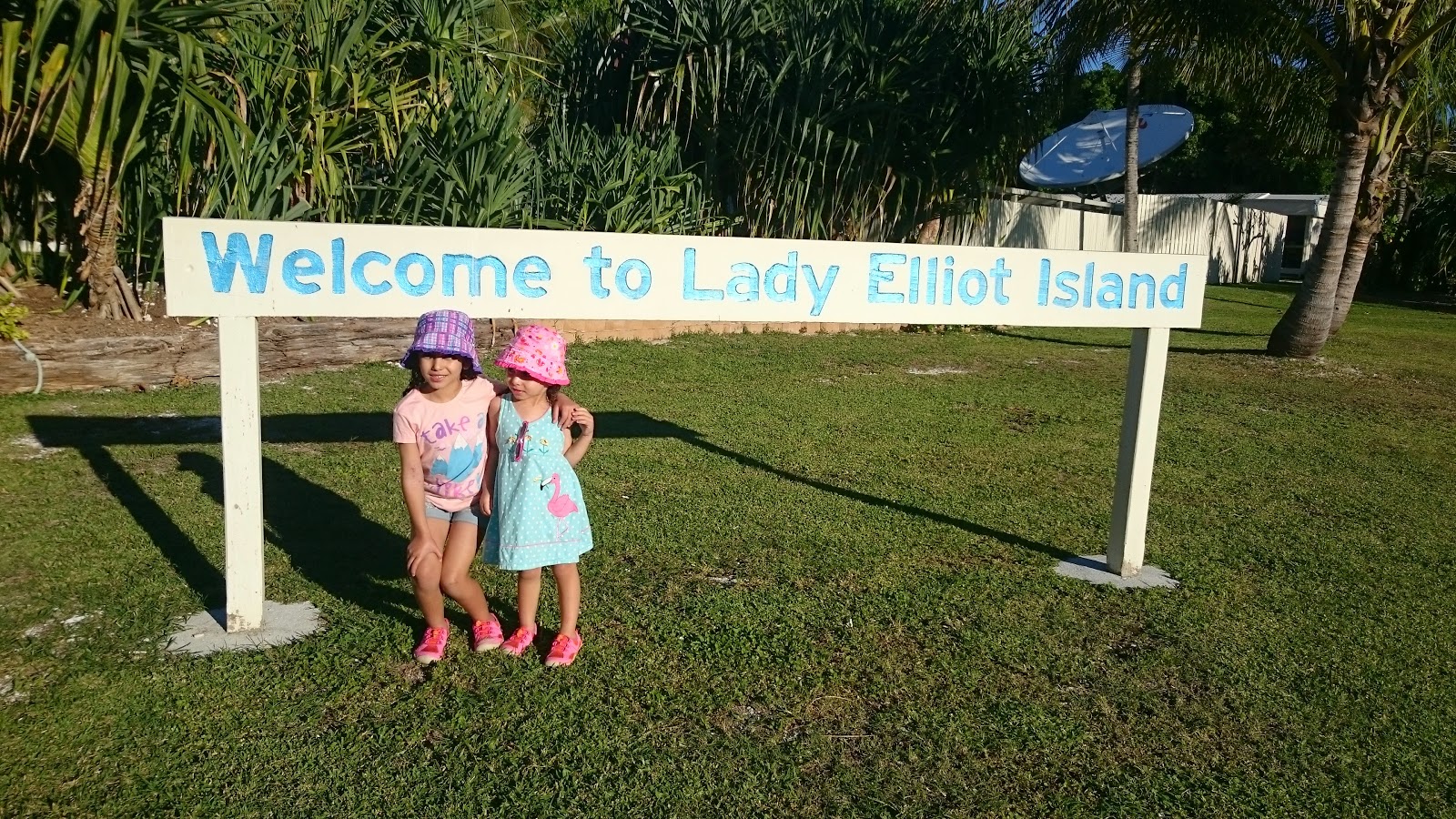
[Now for those of you who are less interested in my musings and more in our time in Australia, this is for you: this past weekend, we took a day trip to Lady Elliot Island, over the southern part of the Great Barrier Reef. A glass-bottomed boat took us out for some amazing snorkeling. We saw every color imaginable on every shape and size of fish imaginable, and sea turtles, and even a few manta rays. My only regret is that we didn’t have a waterproof camera, but perhaps this absence allowed us to just enjoy the experience a little more.]

View of the island as we approached in our little 14-seat propeller plane.
 

A Trip to the Grocery Store

One of the fun little things to do when abroad, as most any traveler will tell you, is to peruse the items in a grocery store. So I’m taking you on a trip to see just a sample of the items in a typical Australian market. Keeping it light this time, folks. 
Walking down the cereal aisle, I recognized a familiar box. Hey, you say “raisin,” I say “sultana!”
Some day, I’m going to look into how such two totally different words developed in the English language for the same dried fruit.


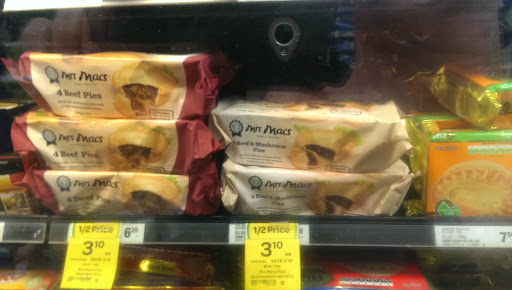
Savory pies are a staple. What’s the U.S. equivalent? Hot Pockets? Marie’s Chicken Pot Pies? Frozen burritos? 

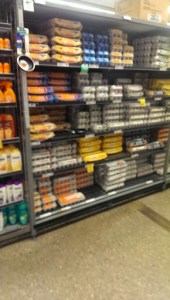
Something about Australian eggs does not require refrigeration…
Also, I wish I’d taken a close-up so you could see the eggs marked as “caged” as well as “cage-free.” No room for doubt there.
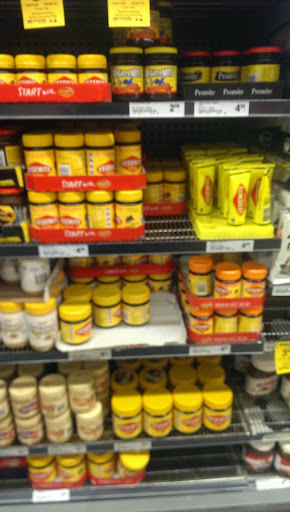
This one’s obligatory: what self-respecting Aussie pantry would be complete without Vegemite?

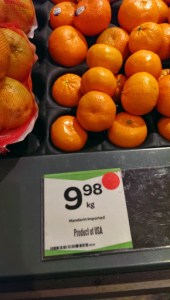
On the rare occasion that fruit is shipped all the way from the U.S., the price reflects it. (The vast majority of fruit is grown in Australia, though a recent news expose just uncovered the exploitation of migrant labor in harvesting said fruit.)
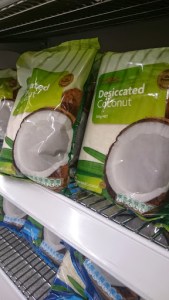
Variation in language use is one of my favorite discoveries. Most items labeled “dessicated” in the U.S. would not be sitting peacably on a supermarket shelf.

Tea (or coffee) hour is awarded its due respect with the wide variety of biscuits available. 
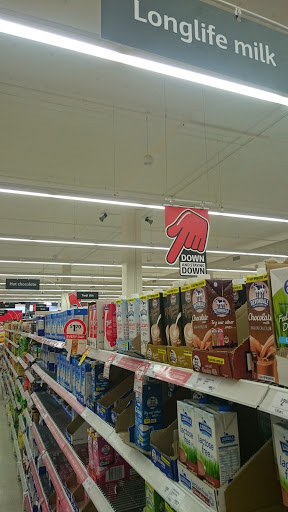
No running to the store because you’ve run out of milk
when you can have a supply of ultra-pasteurized milk waiting on your pantry shelf.

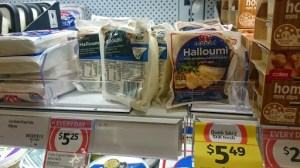
First time I saw “Halloumi” in a restaurant entree description, I had no idea what it referred to. Turns out it’s this lovely Cypriot cheese that is widely available here.

This is one of my favorite: why bother with a name like “cheddar” when you can call it what it is: Tasty!

It’s rare to find chicken or meat that is not marked as either free-range, antibiotic free, or the like.
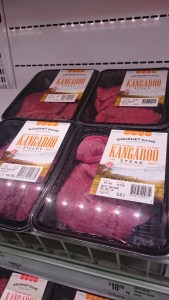
Then, of course, there are the things you’d never see in a U.S. grocery store…
…and–full disclosure–I’ve only seen this particular burger once, and can’t say how popular it is.
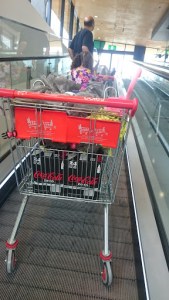
That was fun. And to make sure we leave on a happy note, moving ramps to the car park are cart-friendly (the wheels lock onto the ramp by some brilliantly simple little mechanism).

Sparkling Waters and the Blue Beneath

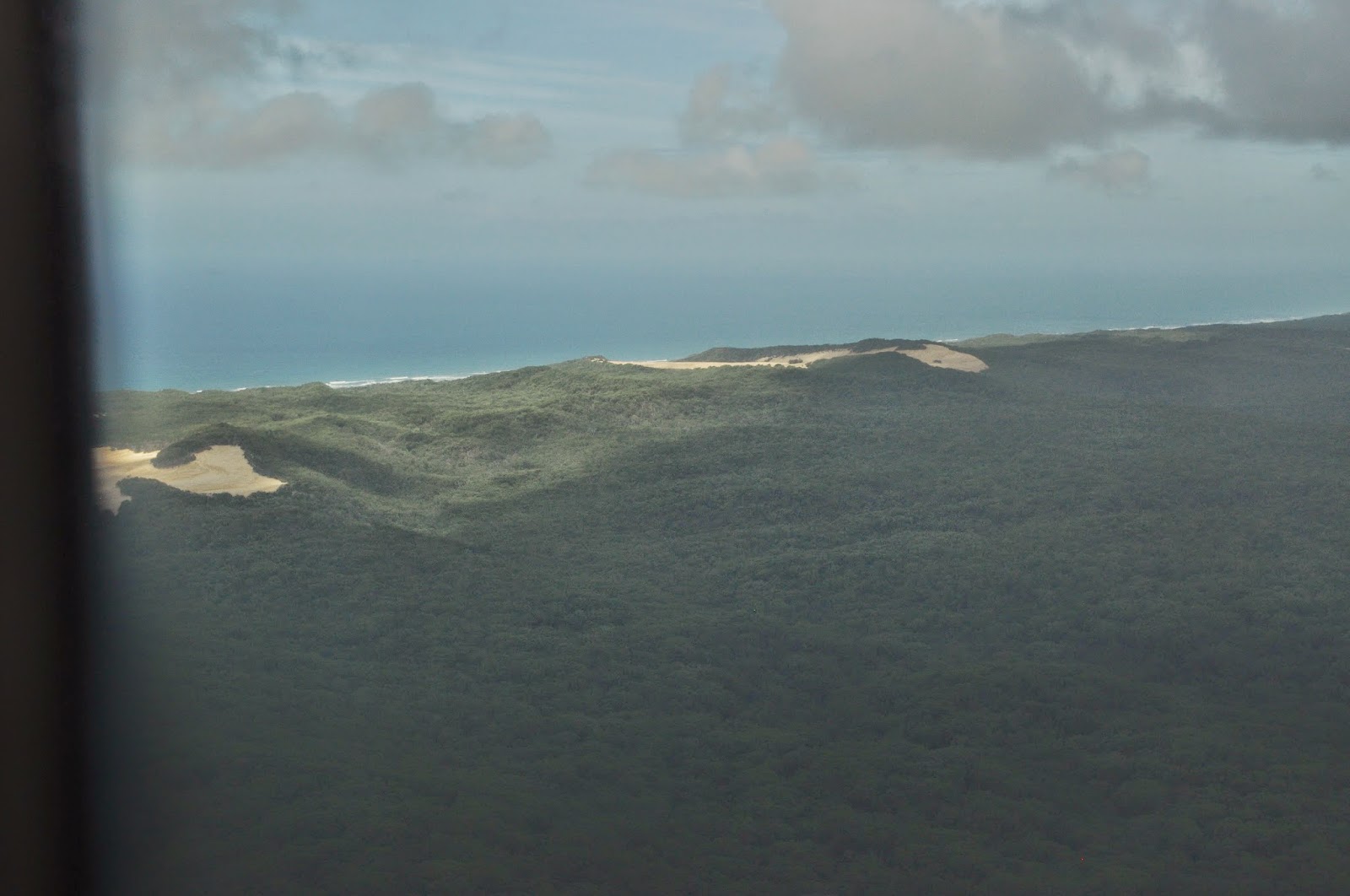
Fraser Island, partial cover of rain clouds
I woke up somewhere around 2:30 a.m. the other night, I think from a disturbing dream. In that strange place between sleep and wakefulness, as they often are, my thoughts were muddled yet piercing. “What,” I asked myself, “are we doing here? How is it that we found ourselves on this spot on the Australian map?” I thought of our family and friends and our home and the lives we had left behind. They are precious to us; how did we have the–what: courage? madness?–to leave them behind, even temporarily, and land here?
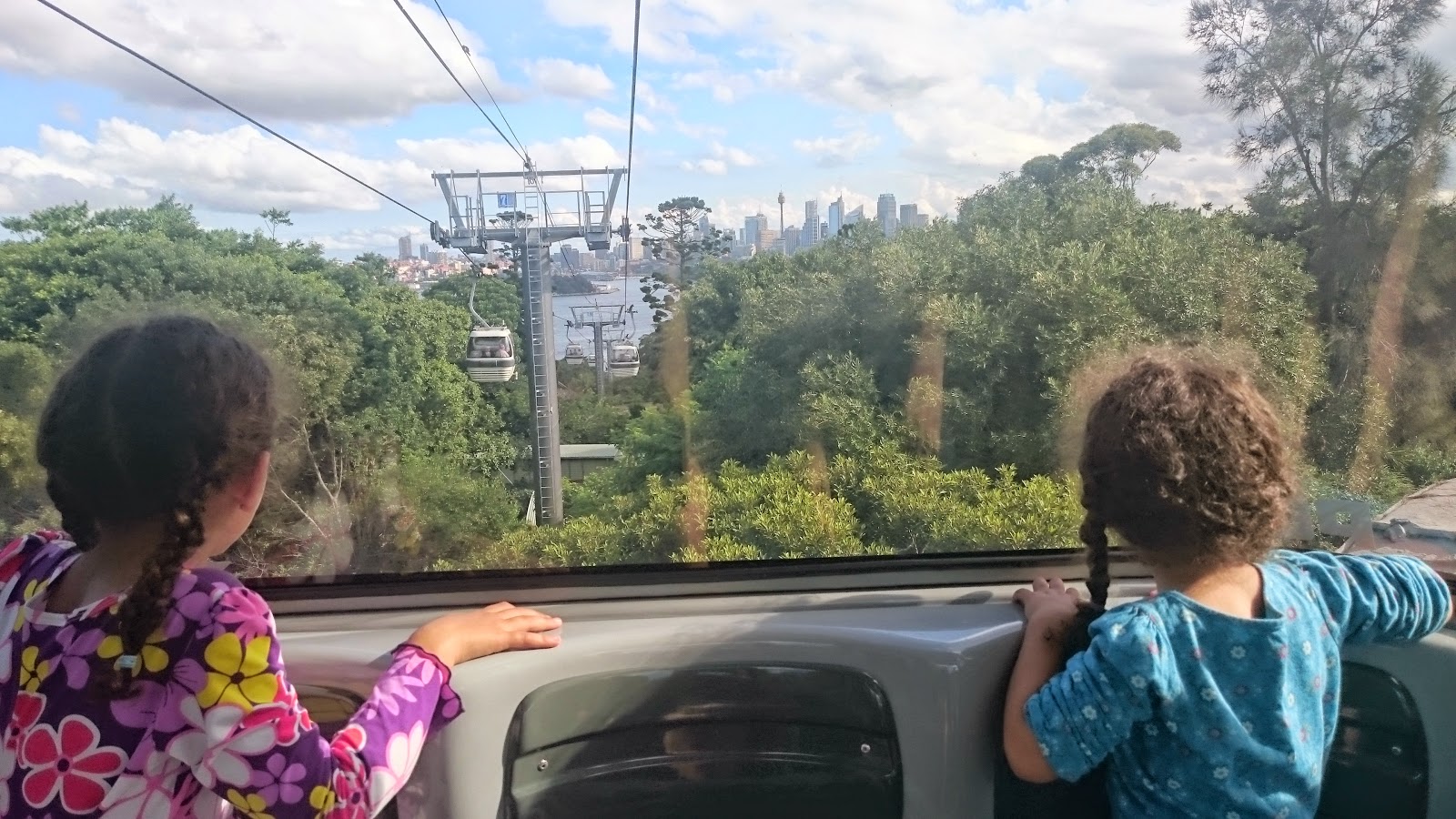
Moments like this are why…going up the cable car at the Taronga Zoo, Sydney.

My thoughts turned to my dad’s passing, and that horrible, dark day when we were ripped out of our everyday happiness to learn he’d been taken from us. I cannot think about that day without a leaden weight settling on my chest again.

Next month, it’ll have been two years. Nothing is the same as it was then. We try to be happy, we try to carry on. He would have wanted that, yes, of course he would. But every now and again, I find that I dip from the little joys–and trivial worries–that occupy our everyday lives to the sadness beneath. It is always there. It is born of the knowledge that, in this life, we will not know again the wholeness that his presence brought. It is born of the conviction that I want to live a life he would be proud of, even, or especially, since his death. This desire is not born out of a desire to please him–no, that would be futile, and juvenile besides, but because I have realized only lately what he knew all along. This life is about building a spirit that will live on, a spirit that will overcome the things of this world that fade, rust, die.

When we were thinking about coming to Australia, one of the thoughts that kept coming to me was this: “we are travelers on this earth. Whether we are a short drive from loved ones or hemispheres and continents apart, this place is not our home.” What would it teach us, what would we discover, in actually experiencing the life of nomads, of souls in but not of this world? The magnitude of that answer will, I think, take the full length of our time here, and perhaps longer, to make itself known. In the meantime, I am immensely grateful for the time and space to look for answers in big ways and small.

On the ferry back to Sydney’s city center, Opera House and Harbour Bridge in the background.
Ariel view of Fraser Island’s eastern coast (75 mile beach)
At the Circular Quay dock, in one of M’s rare, and brief, moments of stillness.

Simplicity

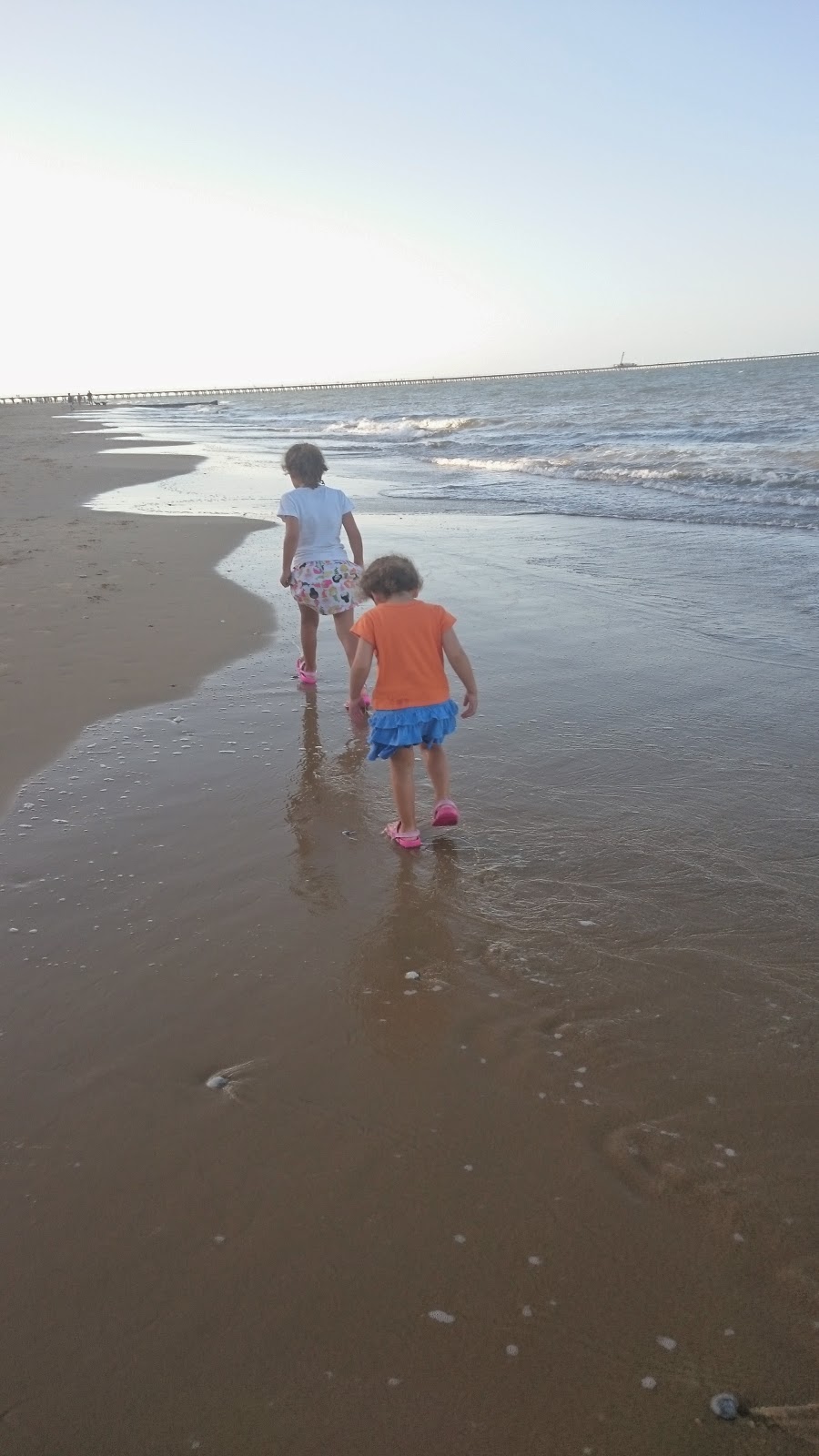
It was about 4pm. Too early for dinner, and too late to go out anywhere, when just getting the kids to put their shoes on and climb in the car can take 20 minutes. None of the toys at home were holding the kids’ attention. So I proposed we go down to the beach for a quick walk.

As it always does for the kids, amazingly so, the simple walk turned into an adventure–usually a hunt for unusual shells. That day, it was also a drawing session. The six-year-old would draw her figures, only to watch, half distressed and half amused, as a wave would rush up and wash half of them away. Then she would begin again, unperturbed by concepts such as time or effort wasted.

I watched the two of them, taking pure joy in this simple walk, and feeling that joy myself. In our “regular” lives, an hour like this would have been hard to find. So full did we keep our days, between the necessities of running a household and the multitude of involvements (social, professional, etc.) that I never had time–never made time–for things like an aimless walk at dusk (setting aside, for the moment, that Columbus lacks an ocean shore on which to take said walk).


Lent season is almost over now. Simplicity, everything pared down to its essence, seems to have been the theme, appropriately so for me. Spiritually, it has been a time of reflection and questioning, but mostly of soaking in the care with which God has kept us. Not every day has been easy, being so far from family and loved ones, and navigating new rules, professionally and socially. But we have always felt God’s Hand, protecting when we worried, holding when we needed comfort. It’s a very simple idea, but no less powerful for it.

Materially, it has also been a season of simplicity. Preparing Lent meals (all vegan) is always a challenge for me, I will admit. But when you take away my crutches of international grocery stores, really good restaurants, and a work schedule that before had at least allowed my husband to prepare a good share of dinners, what we were left with this Lent was a whole lot of potatoes (which thankfully, the kids invariably enjoy). Roasted potatoes, sweet potatoes (baked and roasted), more roasted potatoes, even mashed potatoes (but that was one of his creations). My six year old always reminds me when she sees them that my father loved potatoes; perhaps he did precisely because of their comforting simplicity. (Note to Mom: don’t worry, I feed the kids animal protein too.)

And perhaps this theme of simplicity was just a continuation of a theme I had pseudo-consciously began when we first embarked on this Australia adventure. After all, even my choices in what clothes to bring was an exercise in paring down: eight t-shirts, two dressy shirts, three pairs of shorts, four skirts, two dresses, and three pairs of sandals (my “winter” wardrobe is warmer clothes, but just about the same quantities). For some of you readers, this may seem totally reasonable. For others, it will seem shockingly spartan, and I would have agreed with you a few years ago. But I had also begun really reflecting on what we really need versus what we are told we need, and this year away was a good chance to test some of those so-called needs.

Food and clothing are, of course, the universal and every-day examples, but our daily habits are ripe with areas in which we can simplify. The Matrix, it turns out, is a more apt analogy for our lives than we often realize. How we choose to spend our concentration and effort (and consequently time) shapes the lives we end up leading. Speaking for myself, I’ve said “no” too infrequently, accepted society’s “must” rules too willingly, and generally signed up for too much too often. It is only in stepping out of it for a time that I have been able to ask myself what things deserved my effort and attention, and why. I wasn’t doing that nearly enough; there’s a reason we were so busy all the time.


On that dusk walk along the beach, we did happen to find something green glittering under a wave’s foam. When we picked it up, we found it was a piece of what looked like green glass, its edges worn smooth by the sand and other ocean forces.  I wondered about its former life, perhaps as a bottle of something. Regardless, now and here, it was a found trinket, beautiful in its simplicity, like this day had been.